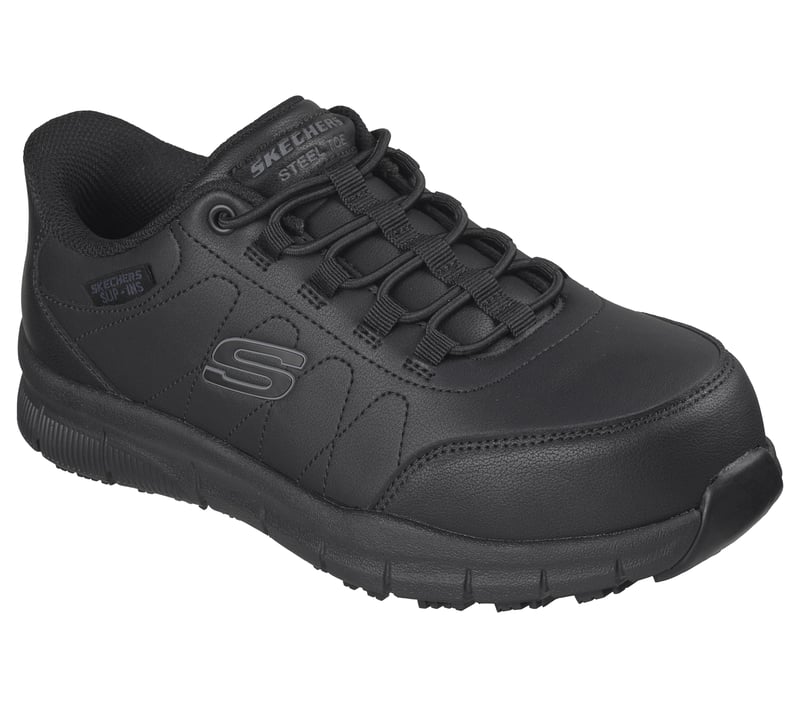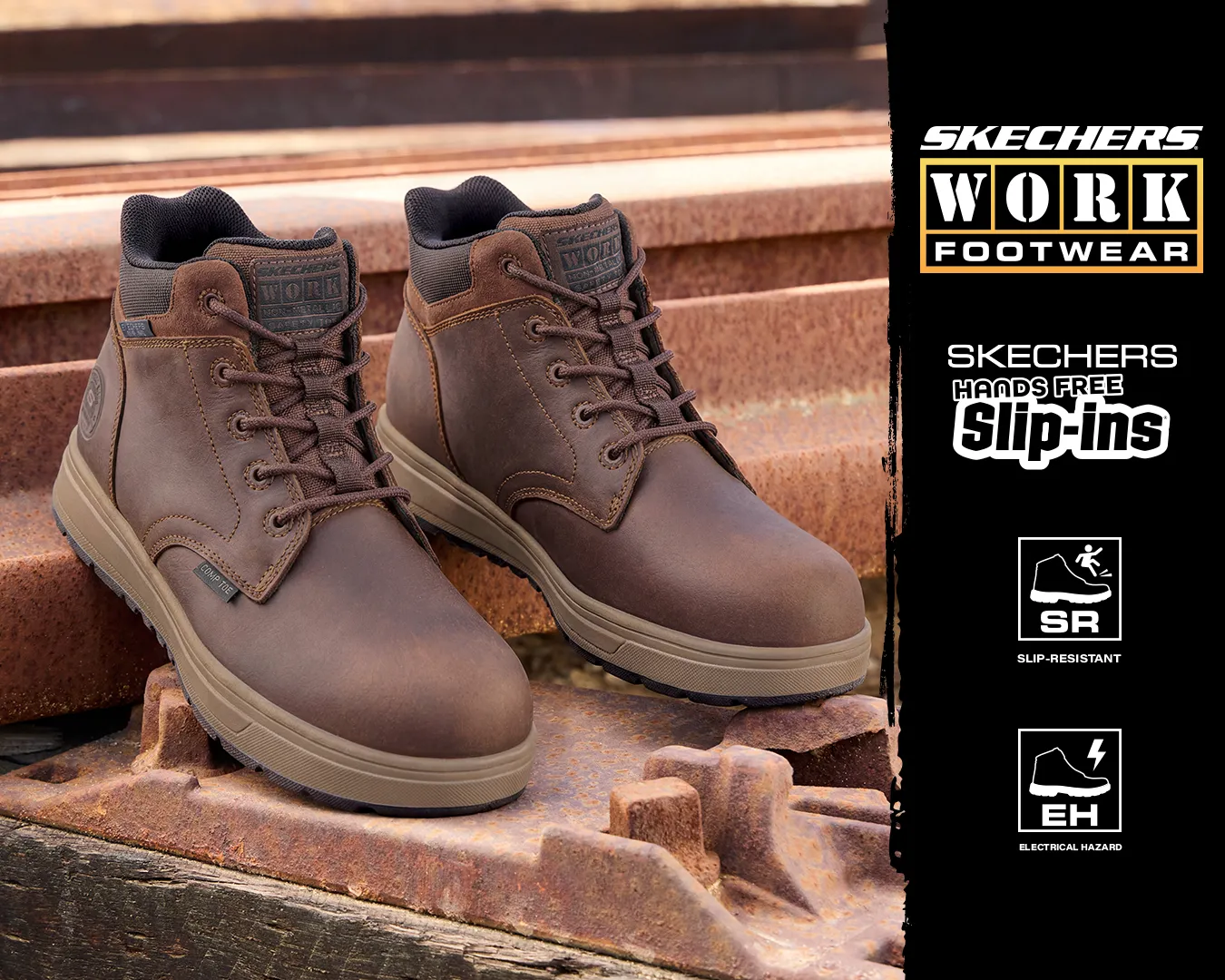
Steel Toe vs. Composite Toe vs. Alloy Toe: Safety Standards Comparison
June 24, 2026
Key Takeaways
- All three toe types — steel, composite, and alloy — must meet the same ASTM F2413 impact and compression standards to be sold as safety footwear in the U.S.
- Steel toes are the heaviest and most affordable, offering proven durability but conducting temperature extremes and triggering metal detectors.
- Composite toes are non-metallic, lighter than steel, and don't conduct heat or cold — making them ideal for outdoor, electrical, or security-screened work environments.
- Alloy toes (aluminum or titanium) are the lightest option while still meeting ASTM standards, though they tend to carry a higher price tag.
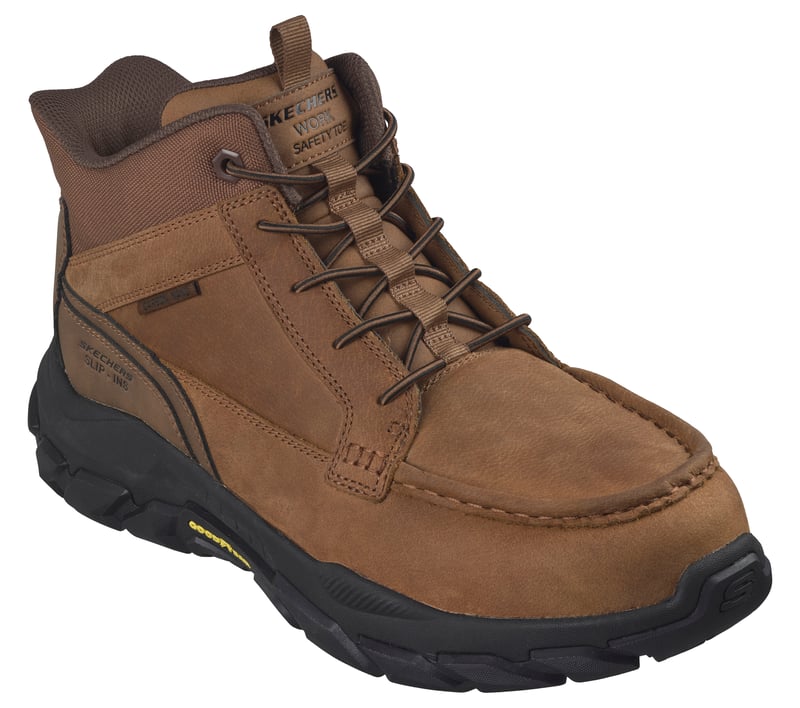
- Skechers composite toe boots meet the exact same ASTM F2413 protection standards as steel — while reducing fatigue through lighter weight and Memory Foam™ cushioning.
- Your workplace hazard profile, environment, and daily mileage should all factor into which safety toe type is right for you.
Why Safety Toe Type Matters More Than You Think
When you're shopping for safety toe work boots, it's easy to fixate on how tough the toe cap looks — but the real decision lives in the details: material, weight, how the boot handles heat and cold, and compliance ratings. The wrong choice can mean sore feet after a 10-hour shift, a failed metal detector screening, or a boot that conducts freezing cold straight into your toes on a winter jobsite.
The good news? All three major safety toe types — steel, composite, and alloy — are engineered to meet the rigorous ASTM F2413 impact and compression standard. That means none of them will leave you underprotected when it matters most. The differences come down to weight, thermal performance, cost, and worksite suitability. This guide breaks it all down so you can make the most informed buy possible.
Understanding ASTM F2413: The Standard Every Safety Toe Must Meet
Before comparing materials, it helps to understand what ASTM F2413 actually requires. This is the ASTM International (formerly the American Society for Testing and Materials) standard that governs protective footwear in the United States. Key ratings within F2413 include:
- Impact Resistance (I/75): The toe cap must withstand 75 ft-lbs of impact force without collapsing below a minimum clearance height.
- Compression Resistance (C/75): The toe cap must withstand 2,500 lbs of compressive force while maintaining clearance for the foot.
- Electrical Hazard (EH): The outsole and heel must resist 18,000 volts at 60 Hz for 1 minute with no current flow exceeding 1.0 milliampere (secondary protection only).
- Slip Resistance (SR): The outsole must deliver a minimum level of grip on specified wet and dry surfaces.
The critical insight here: steel, composite, and alloy toe caps all achieve the same I/75 and C/75 ratings. No toe type offers "more" ASTM protection than another at the same rating level — they simply use different materials to get there.
Steel Toe: The Original Workhorse
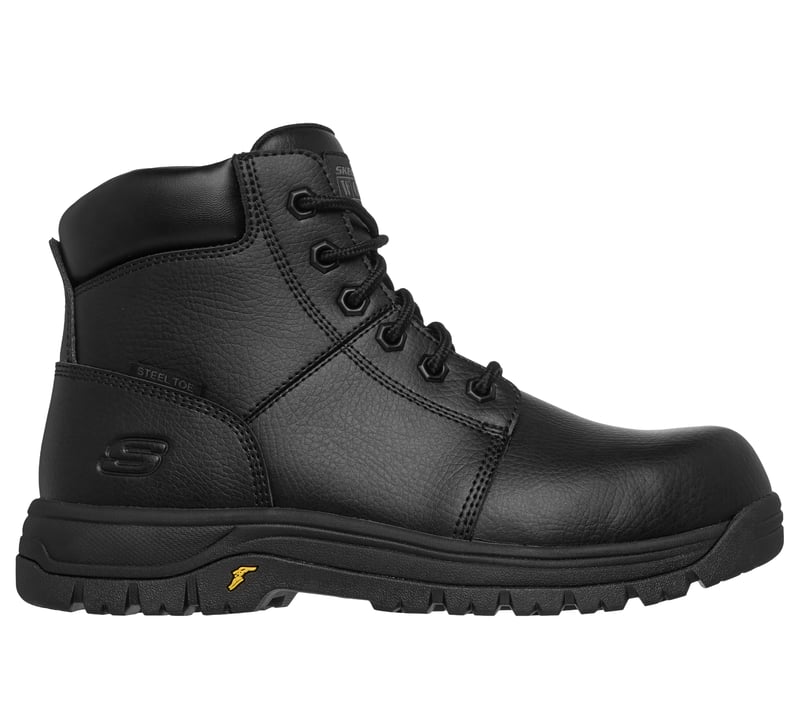
Steel toe boots have protected workers for over a century and remain among the most widely recognized safety footwear options. The toe cap is a formed shell of carbon steel inserted into the boot's toe box.
Pros of Steel Toe
- Most affordable safety toe option at any given boot price point
- Proven, time-tested protection record across industries
- Thinner cap profile at equivalent strength vs. composite
- Resistant to puncture from sharp objects in the toe area
Cons of Steel Toe
- Heaviest option — adds significant fatigue over long shifts
- Conducts temperature — extremely cold in winter, hot in summer environments
- Triggers metal detectors — problematic in airports, courthouses, secure facilities
- Can conduct electricity — not ideal near live electrical hazards without EH-rated soles
Steel toe is the right choice when you need maximum durability at a budget price point and your job site doesn't require passing through metal detection or working in extreme temperatures.
Composite Toe: The Modern All-Rounder
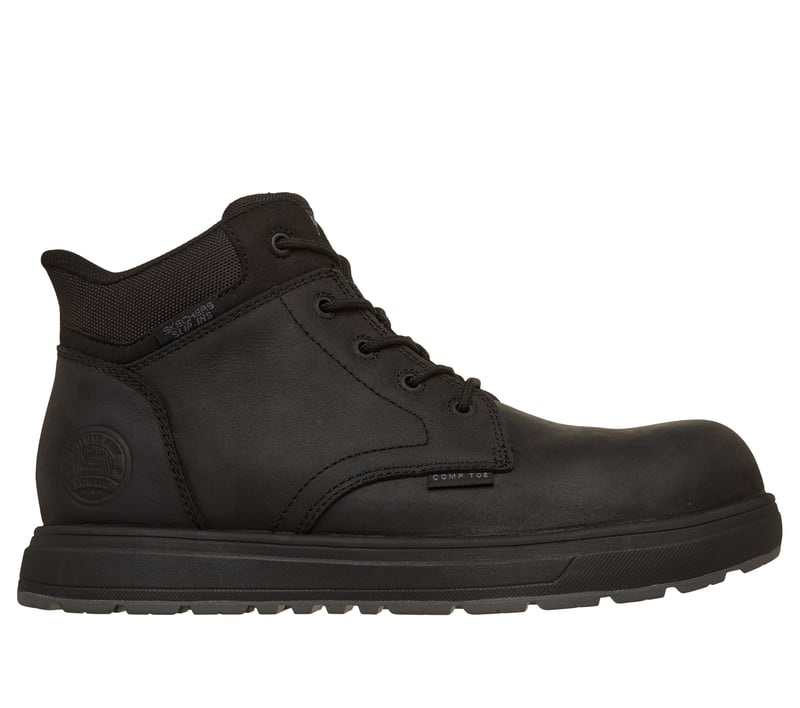
Composite toe caps are made from non-metallic materials — most commonly a combination of carbon fiber, Kevlar®, fiberglass, or hard plastics. They were engineered to solve the most common pain points of steel: weight, temperature conductivity, and metal detection issues.
Pros of Composite Toe
- Lighter than steel — reduces lower-limb fatigue on long shifts
- Doesn't conduct heat or cold — dramatically more comfortable in temperature extremes
- Metal detector-friendly — ideal for secure facilities, airports, courthouses, labs
- Non-conductive — an excellent complement to EH-rated outsoles for electrical work
- Meets the same ASTM F2413 I/75 & C/75 standards as steel
Cons of Composite Toe
- Slightly bulkier cap — requires a slightly larger toe box to achieve same protection rating
- Generally costs more than steel toe at equivalent boot construction
- Not immune to puncture from sharp objects in the same way steel can be
Composite toe is the smart choice for electricians, lab workers, security personnel, cold-weather outdoor workers, and anyone walking high daily step counts who wants to reduce fatigue without sacrificing protection.
Alloy Toe: The Lightweight Champion
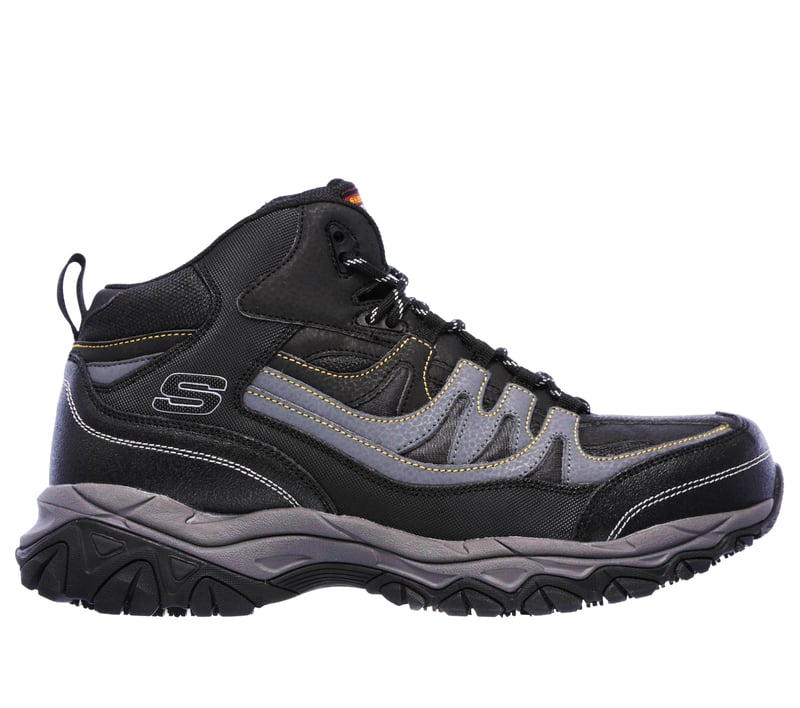
Alloy toe caps use lightweight metals — primarily aluminum or titanium — to achieve the ASTM F2413 protection standard at a dramatically reduced weight compared to carbon steel. They represent the premium end of the safety toe spectrum.
Pros of Alloy Toe
- Lightest metal safety toe available — noticeably lighter than steel while still meeting the standard
- Thinner cap profile than composite, allowing a sleeker toe box fit
- Strong strength-to-weight ratio
- Meets ASTM F2413 I/75 & C/75 standards
Cons of Alloy Toe
- Still metallic — triggers metal detectors, unlike composite
- Conducts temperature — similar cold/heat issue to steel, though less severe
- Highest price point of the three toe types
- Less widely available — fewer style and brand options than steel or composite
Alloy toe is best suited to workers who prioritize a slim, lightweight profile above all else and are willing to invest in premium footwear — and whose worksite doesn't require metal-detector clearance.
Steel Toe vs. Composite Toe vs. Alloy Toe: Full Comparison
| Feature | Steel Toe | Composite Toe | Alloy Toe |
|---|---|---|---|
| Material | Carbon steel | Carbon fiber / Kevlar® / fiberglass / plastic | Aluminum or titanium |
| ASTM F2413 I/75 & C/75 Rated | ✅ Yes | ✅ Yes | ✅ Yes |
| Relative Weight | Heaviest | Lighter than steel | Lightest metal option |
| Temperature Conductivity | High — cold in winter, hot in summer | None — does not conduct heat or cold | Moderate — conducts less than steel |
| Metal Detector Friendly | ❌ No | ✅ Yes | ❌ No |
| Electrical Conductivity | Conductive (EH rating is in sole, not toe) | Non-conductive | Conductive (EH rating is in sole, not toe) |
| Toe Box Bulk | Slim profile | Slightly bulkier | Slim profile |
| Relative Cost | Most affordable | Mid-range | Most expensive |
| Best For | Budget-focused buyers, heavy industrial sites | Electricians, outdoor/cold workers, secure facilities | Workers prioritizing max lightweight comfort |
| Skechers Availability | ✅ Yes (steel toe collection) | ✅ Yes (wide composite toe range) | Limited — see alloy styles |
Steel Toe
Carbon steel
Composite Toe
Carbon fiber / Kevlar® / fiberglass / plastic
Alloy Toe
Aluminum or titanium
Steel Toe
✅ Yes
Composite Toe
✅ Yes
Alloy Toe
✅ Yes
Steel Toe
Heaviest
Composite Toe
Lighter than steel
Alloy Toe
Lightest metal option
Steel Toe
High — cold in winter, hot in summer
Composite Toe
None — does not conduct heat or cold
Alloy Toe
Moderate — conducts less than steel
Steel Toe
❌ No
Composite Toe
✅ Yes
Alloy Toe
❌ No
Steel Toe
Conductive (EH rating is in sole, not toe)
Composite Toe
Non-conductive
Alloy Toe
Conductive (EH rating is in sole, not toe)
Steel Toe
Slim profile
Composite Toe
Slightly bulkier
Alloy Toe
Slim profile
Steel Toe
Most affordable
Composite Toe
Mid-range
Alloy Toe
Most expensive
Steel Toe
Budget-focused buyers, heavy industrial sites
Composite Toe
Electricians, outdoor/cold workers, secure facilities
Alloy Toe
Workers prioritizing max lightweight comfort
Steel Toe
✅ Yes (steel toe collection)
Composite Toe
✅ Yes (wide composite toe range)
Alloy Toe
Limited — see alloy styles
The Skechers Weight-to-Strength Advantage: Same ASTM Rating, Less Fatigue
Here's the case Skechers makes — and backs up with data — for composite toe: you don't have to carry extra weight to get certified protection.
Every Skechers composite toe boot bearing the ASTM F2413 certification has passed the identical 75 ft-lbs impact and 2,500 lb compression tests as any steel toe boot on the market. There's no safety compromise. What changes is what happens to your legs, knees, and lower back after 8 or 10 hours on your feet.
Research on workplace fatigue consistently shows that the weight on your feet — including footwear — has an outsized impact on how much energy you burn and how tired your legs feel. Studies on the "economy of locomotion" suggest that weight carried on your feet costs noticeably more energy than the same weight carried on your torso. A lighter toe cap isn't a luxury — it's a comfort advantage that adds up with every step of your shift.
Skechers composite toe boots pair this weight benefit with:
- Skechers Memory Foam™ insoles that conform to your foot's shape for personalized cushioning
- Air-Cooled Memory Foam® in select styles to manage heat and moisture
- Heel Pillow® technology in Slip-ins styles for a secure, locked-in feel
- Goodyear® rubber outsoles on premium styles for superior traction and durability
ASTM F2413 Protection: What the Ratings Actually Mean
| ASTM Rating Code | What It Tests | Pass Threshold | Steel Toe | Composite Toe | Alloy Toe |
|---|---|---|---|---|---|
| I/75 — Impact Resistance | Toe cap struck by 75 ft-lbs of force; clearance height measured | Minimum clearance maintained post-impact | ✅ Pass | ✅ Pass | ✅ Pass |
| C/75 — Compression Resistance | Toe cap compressed under 2,500 lbs static load | Minimum clearance maintained under load | ✅ Pass | ✅ Pass | ✅ Pass |
| EH — Electrical Hazard | Outsole/heel tested at 18,000V / 60Hz for 60 seconds | Current flow ≤ 1.0 milliampere | Sole-dependent | Sole-dependent | Sole-dependent |
| SR — Slip Resistance | Coefficient of friction on wet ceramic tile and steel | Minimum grip level on wet & dry | Sole-dependent | Sole-dependent | Sole-dependent |
| MT/75 — Metatarsal Guard | Impact applied to metatarsal region | Maintained clearance post-impact | Available in some styles | Available in some styles | Rare |
| PR — Puncture Resistance | Fastener driven through outsole | Must resist penetration | Sole-dependent | Sole-dependent | Sole-dependent |
What It Tests
Toe cap struck by 75 ft-lbs of force; clearance height measured
Pass Threshold
Minimum clearance maintained post-impact
Steel Toe
✅ Pass
Composite Toe
✅ Pass
Alloy Toe
✅ Pass
What It Tests
Toe cap compressed under 2,500 lbs static load
Pass Threshold
Minimum clearance maintained under load
Steel Toe
✅ Pass
Composite Toe
✅ Pass
Alloy Toe
✅ Pass
What It Tests
Outsole/heel tested at 18,000V / 60Hz for 60 seconds
Pass Threshold
Current flow ≤ 1.0 milliampere
Steel Toe
Sole-dependent
Composite Toe
Sole-dependent
Alloy Toe
Sole-dependent
What It Tests
Coefficient of friction on wet ceramic tile and steel
Pass Threshold
Minimum grip level on wet & dry
Steel Toe
Sole-dependent
Composite Toe
Sole-dependent
Alloy Toe
Sole-dependent
What It Tests
Impact applied to metatarsal region
Pass Threshold
Maintained clearance post-impact
Steel Toe
Available in some styles
Composite Toe
Available in some styles
Alloy Toe
Rare
What It Tests
Fastener driven through outsole
Pass Threshold
Must resist penetration
Steel Toe
Sole-dependent
Composite Toe
Sole-dependent
Alloy Toe
Sole-dependent
Who Should Choose Composite Toe? A Worksite-by-Worksite Guide
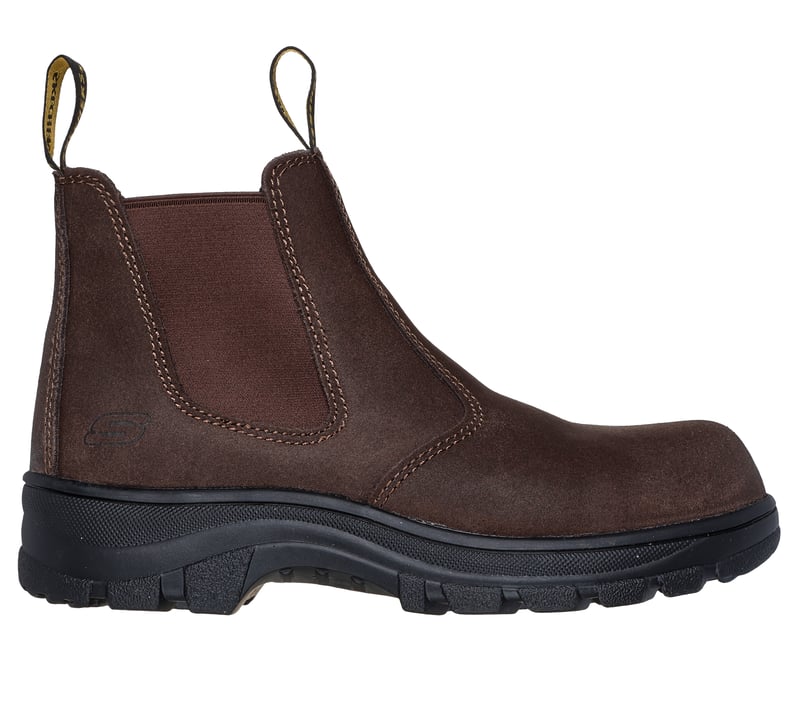
Composite toe is the right call for a wide range of professions. Here's a quick breakdown by worksite type:
- Electrical & Utilities: Non-conductive composite toe + EH-rated outsole = maximum electrical safety. Steel toe conducts electricity; composite doesn't.
- Construction in Cold Climates: Composite doesn't transfer freezing temperatures into your toes the way steel does. Essential for outdoor winter work.
- Airport, Hospital, Government, or Courthouse Workers: Metal detector requirements make composite the only practical safety toe option.
- Warehouse & Logistics (High Step Count): If you're walking 15,000–20,000 steps a day, the lighter composite toe reduces cumulative fatigue significantly.
- Manufacturing & Light Industrial: Composite meets identical ASTM standards to steel, so there is no protection trade-off for general industrial use.
- Healthcare (Safety Toe Required): Non-metallic, lighter weight — perfect for professionals who also need all-day comfort in clinical settings.
Who Should Choose Steel Toe?
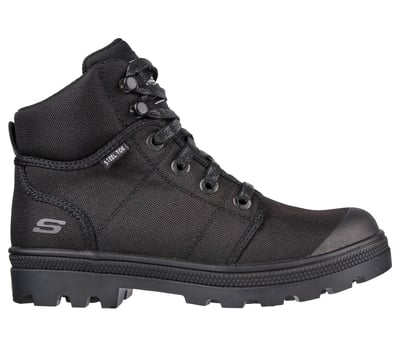
Steel toe remains an excellent choice for many workers, and Skechers offers steel toe options with the same comfort technology found across the Work collection.
- Heavy Industrial & Construction: High-impact environments where heavy rolling or falling objects are a daily hazard — steel's thin profile and proven durability shine here.
- Budget-Conscious Buyers: Steel toe boots consistently come in at a lower price for equivalent boot construction. If cost is a primary factor, steel delivers certified protection at a lower outlay.
- Indoor Controlled Environments: Factories or warehouses without extreme temperature variation remove composite's biggest advantage, making steel a sound choice.
- Trades Requiring Maximum Toe Durability: Steel is more resistant to repeated lateral impacts and abrasion in the toe area than composite materials.
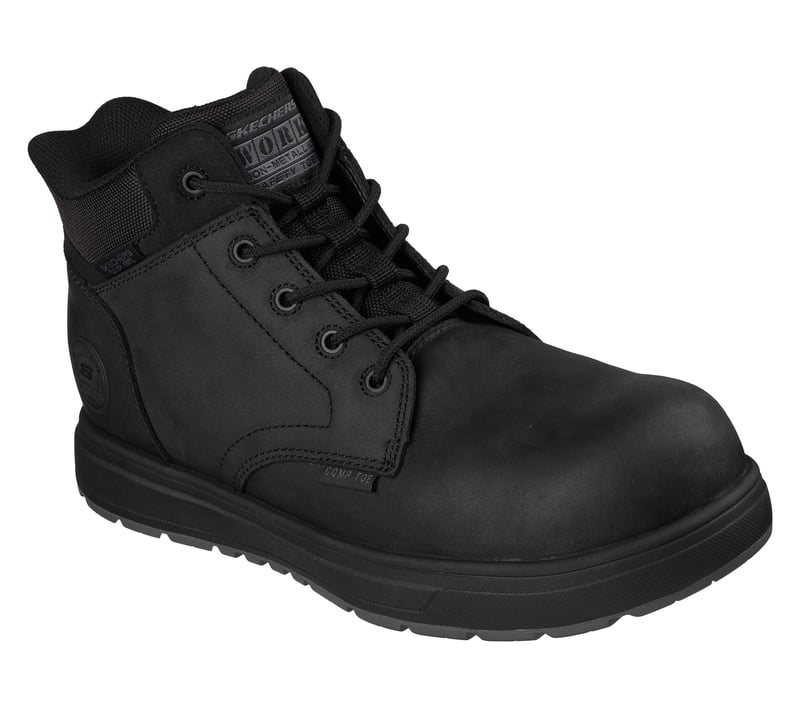
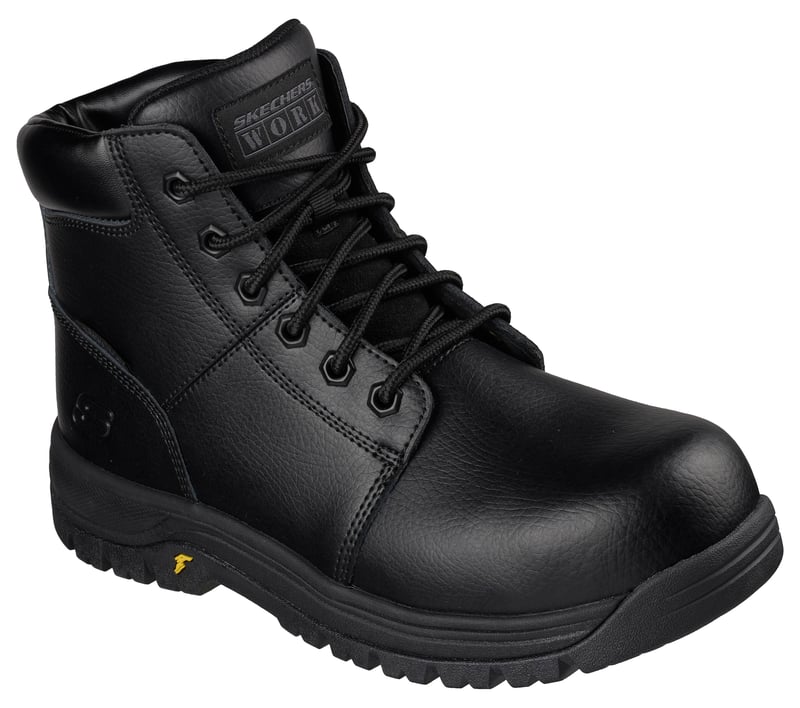
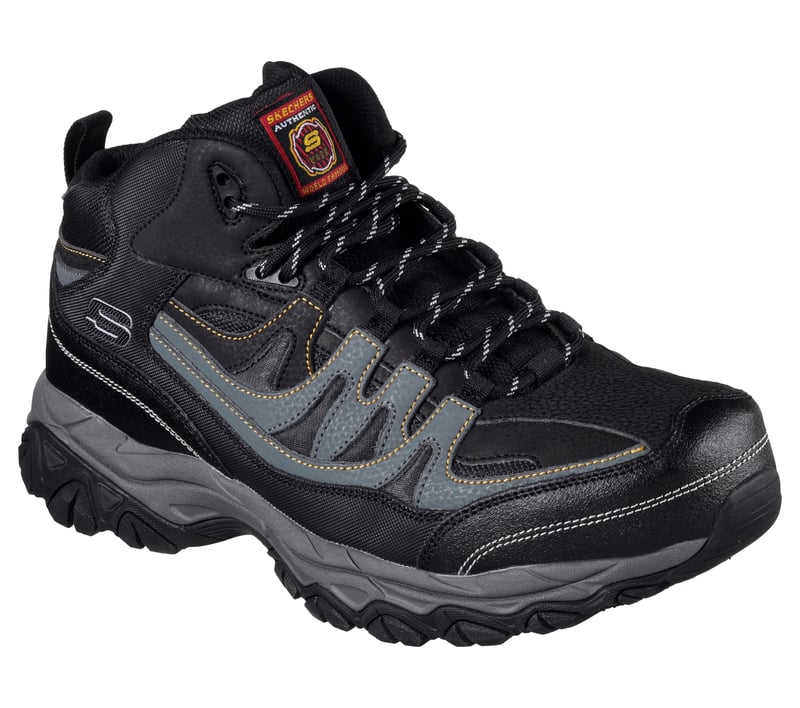
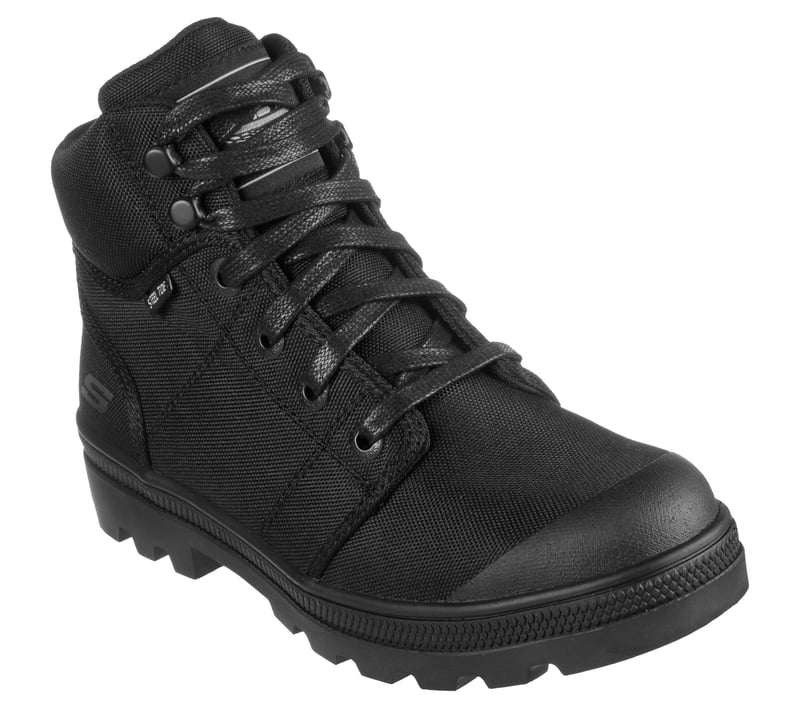
Skechers steel toe boots like the Workshire 2.0 and Work: Rotund - Darragh ST pair certified steel safety toes with Memory Foam™ cushioning and slip-resistant outsoles — so even the "heavier" choice is as comfortable as possible.
Skechers Hands Free Slip-ins® Work: Safety Without the Hassle
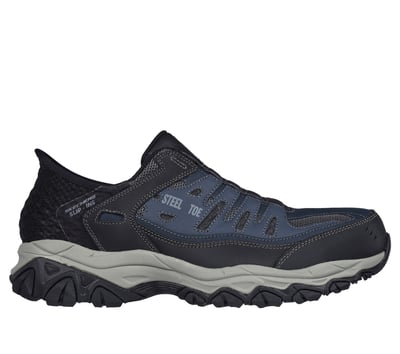
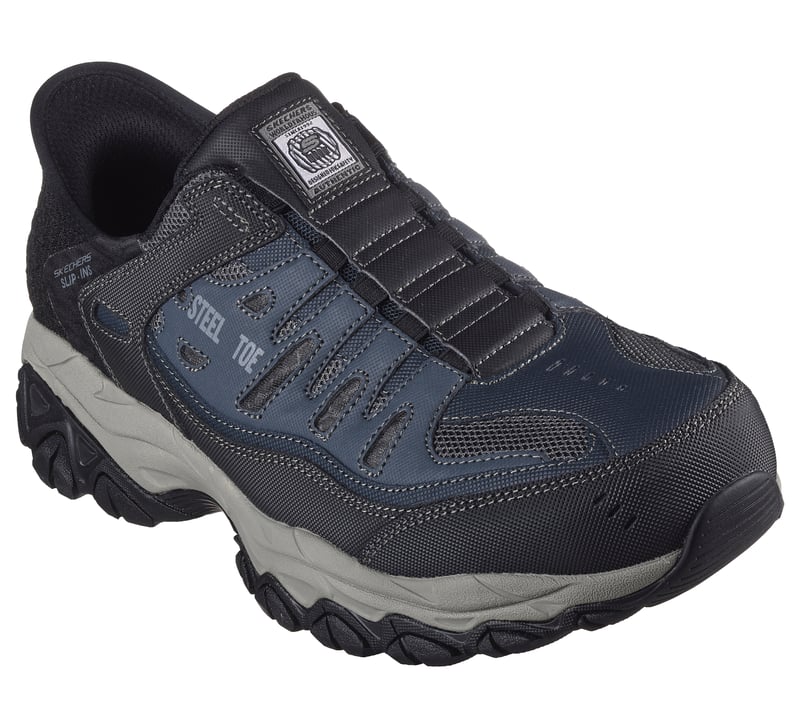
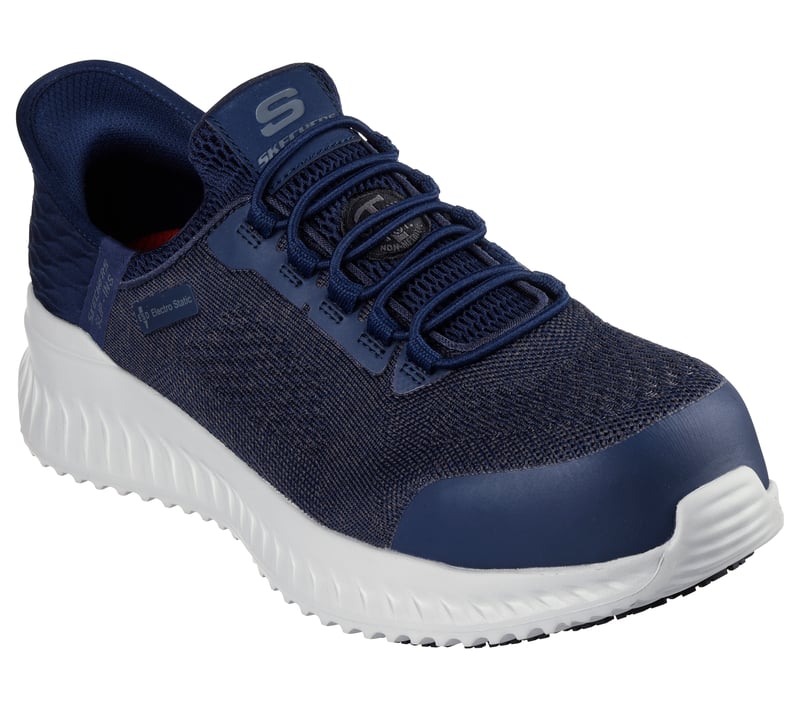
One of the most significant recent innovations in safety footwear is the Skechers Hands Free Slip-ins® Work range — and it's available with composite safety toes. These boots and shoes feature the Heel Pillow® technology that holds your foot securely in place, eliminating the need to use your hands (or another foot) to pull your boot on.
For workers who suit up multiple times per shift, or who carry equipment and can't spare their hands, this is a genuine quality-of-life upgrade. And critically — these are ASTM-certified safety toe shoes, not a compromise. You get:
- Composite safety toe meeting ASTM F2413 I/75 & C/75
- Electrical Hazard rated design
- Slip-resistant outsole (SR rated)
- Heel Pillow® for a secure, no-slip fit
- Air-Cooled Memory Foam® cushioned insole
Available in men's and women's styles across sneaker and boot silhouettes.
How to Read a Safety Toe Boot Label
When buying any safety toe footwear, look for the ASTM F2413 label inside the boot. It will list a series of codes that tell you exactly what the boot has been tested and certified for. Here's how to decode it:
- ASTM F2413-18 (or current year) — confirms the boot meets the current standard version
- M or W — Men's or Women's sizing standard
- I/75 — Impact resistance rating (75 ft-lbs)
- C/75 — Compression resistance rating (2,500 lbs)
- EH — Electrical Hazard rated (secondary protection)
- SR — Slip Resistant outsole
- PR — Puncture Resistant midsole (if present)
- MT/75 — Metatarsal Guard (if present)
A boot labeled ASTM F2413 I/75 C/75 EH SR — whether steel, composite, or alloy toe — has passed all four of those tests to the same objective threshold. You shouldn't be swayed by marketing that implies one toe material is automatically "more protective" than another at the same rating level. The material is about how that protection is delivered — not whether it's delivered.
Safety Toe Work Boots for Women: Same Standards, Purpose-Built Fit
Safety toe protection standards don't differ by gender — ASTM F2413 I/75 and C/75 apply equally across men's and women's footwear. What does differ is the fit, last shape, and design of the boot itself.
Skechers offers a dedicated women's work boot collection featuring both composite and steel safety toes, built on lasts designed specifically for the female foot — with a narrower heel, adjusted arch, and proper forefoot volume. Women's specific styles in the Skechers Work range include:
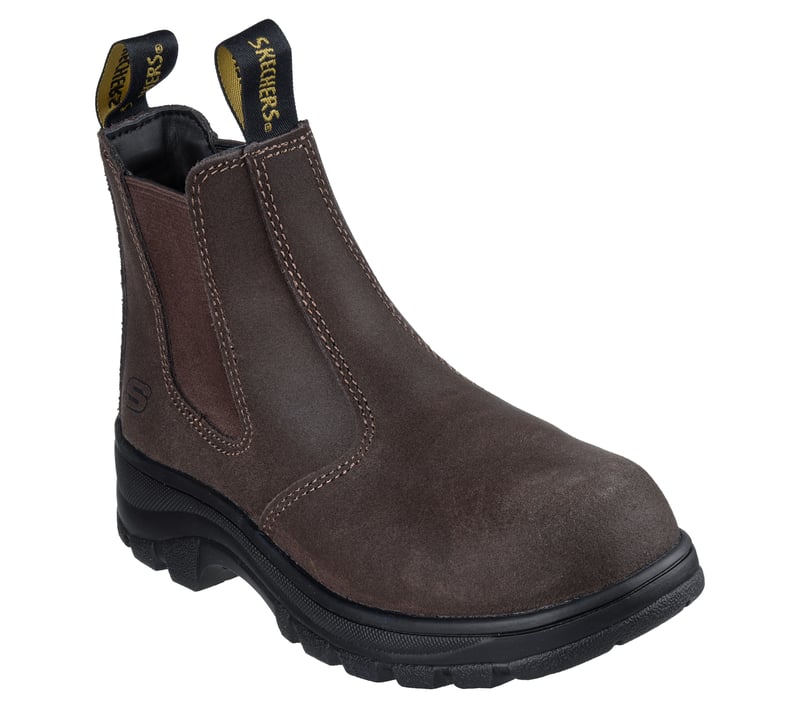
- Work: Workshire - Jannit Comp Toe (108082) — Pull-on Chelsea boot with composite toe and Memory Foam™
- Work: Bulklin - Balran Comp Toe — Composite toe work sneaker with EH-rated design
- Skechers Slip-ins Work: Nampa - Enelo — Hands-free slip-resistant work shoe
- Work: Rotund - Darragh ST — Steel toe athletic work sneaker with SR outsole
Steel Toe vs. Composite Toe: Frequently Asked Questions
Is composite toe as safe as steel toe?
Yes. Composite toe caps that carry the ASTM F2413 I/75 and C/75 certification have passed the identical impact (75 ft-lbs) and compression (2,500 lbs) tests as steel toe caps with the same ratings. There's no safety compromise — the difference is in the material used to achieve that protection, not in the level of protection provided. All Skechers composite toe boots are ASTM F2413 certified.
Do composite toe boots set off metal detectors?
No. Composite toe caps are made from non-metallic materials such as carbon fiber, Kevlar®, fiberglass, or reinforced plastics. They won't trigger metal detectors, making them the preferred choice for workers in airports, courthouses, hospitals, government facilities, and any other metal-screened environment.
Are composite toe boots colder than steel toe boots in winter?
Actually, the opposite is true. Composite toe caps do not conduct heat or cold due to their non-metallic properties. Steel toe caps conduct temperature from the environment into your foot, which can make them extremely cold in winter and uncomfortable in summer heat. Composite toe is the better choice for outdoor work in temperature extremes.
What does ASTM F2413 mean on a work boot?
ASTM F2413 is the American Society for Testing and Materials standard for protective footwear. A boot labeled ASTM F2413 has been independently tested to meet specified minimums for impact resistance (I/75 = 75 ft-lbs), compression resistance (C/75 = 2,500 lbs), and any additional codes shown (EH = Electrical Hazard, SR = Slip Resistant, PR = Puncture Resistant). Always check the full label inside the boot to see which ratings it carries.
What is an alloy toe, and how does it differ from steel and composite?
Alloy toe caps use lightweight metals — most commonly aluminum or titanium — to achieve ASTM F2413 protection at a lower weight than carbon steel. They are lighter than steel but still metallic, so they trigger metal detectors and conduct temperature. Alloy toes tend to have a slimmer profile than composite toes. They are generally the most expensive of the three options and are less widely available.
Can I wear composite toe boots for electrical work?
Yes — and composite toe is actually the preferred choice for electrical work. Because composite toe caps are non-conductive, they complement the boot's EH-rated outsole to provide comprehensive electrical protection. Steel toe caps, while not the primary path of electrical contact, are still metallic. Always look for the EH (Electrical Hazard) rating on the boot's ASTM label for work near live circuits.
Are Skechers Work boots OSHA compliant?
OSHA's footwear standard (29 CFR 1910.136) requires protective footwear that meets ASTM F2413 or ANSI Z41 standards in workplaces with foot hazards. Skechers Work safety toe boots bearing the ASTM F2413 certification label satisfy this requirement. Always confirm with your employer or safety officer which specific ratings (I/75, C/75, EH, SR, PR, MT) are required for your role and environment.
What is the difference between a safety toe and a steel toe?
"Safety toe" is the broader term for any ASTM-certified protective toe cap, regardless of material. "Steel toe" refers specifically to safety toe caps made from carbon steel. All steel toes are safety toes, but not all safety toes are steel — composite and alloy toes are also certified safety toes. When a job posting or safety requirement says "safety toe required," a certified composite or alloy toe boot typically satisfies that requirement.
Our Verdict: Which Safety Toe Is Right for You?
There's no single "best" safety toe type for everyone — but there is a best choice for your situation. Here's a quick decision framework:
- ✅ Choose Composite Toe if: You work outdoors in temperature extremes, need to pass metal detectors, work with or near electricity, or walk high daily step counts and want to reduce fatigue.
- ✅ Choose Steel Toe if: You're in heavy industrial environments with high-impact hazards, are working within a tight budget, or work in climate-controlled indoor facilities where temperature conductivity isn't an issue.
- ✅ Choose Alloy Toe if: You want the absolute lightest possible safety toe, have no metal detector requirements, and are willing to invest in a premium boot for maximum comfort at the end of a long shift.
Whatever you choose, prioritize ASTM F2413 certification on the label, a slip-resistant outsole for your work surface, and a fit that supports your foot properly over the course of a full shift. Skechers Work brings all three toe types together with the comfort technology — Memory Foam™, Air-Cooled insoles, Hands Free Slip-ins®, and Goodyear® outsoles — to make every shift more manageable.