



Pickleball 101: Rules, Scoring & How to Play
Pickleball is played as singles or doubles. Serve diagonally beyond the kitchen, let the serve and return bounce, then continue the rally. Players cannot volley while touching the kitchen or its lines. In traditional side-out scoring, only the serving side scores, and games usually go to 11, win by two.
Sep 23, 2026
Pickleball is a paddle sport you can play with two people in singles or four in doubles. Serve diagonally, let the serve and its return bounce, then trade shots until someone makes a mistake. In traditional scoring, only the serving side earns points, and games usually go to 11, win by two.
The fun starts when a gentle shot outsmarts a big swing, and “one more game” becomes the afternoon’s favorite suggestion.
This guide covers your first game using traditional side-out scoring.
Rules reference: 2026 official pickleball rules.
The fun starts when a gentle shot outsmarts a big swing, and “one more game” becomes the afternoon’s favorite suggestion.
This guide covers your first game using traditional side-out scoring.
Rules reference: 2026 official pickleball rules.
What Do You Need to Play Pickleball?
Bring a paddle for each player, a pickleball suited to the playing environment, court shoes, comfortable clothes and water. You’ll need a marked court and net; borrowing a paddle is fine for your first session.
Singles and doubles use the same 20-foot-wide, 44-foot-long court. Know these landmarks:
Singles and doubles use the same 20-foot-wide, 44-foot-long court. Know these landmarks:
- Baseline: The back boundary, behind which you serve.
- Service courts: The right and left receiving boxes.
- Kitchen: The non-volley zone extending seven feet from each side of the net, including its boundary lines.
How to Serve in Pickleball
Choose the first serving side using a fair method, such as a coin toss. In doubles, the first server starts on the right.
Aim diagonally across the net into the opposite service court. Your serve must clear the kitchen and its line. A serve touching the correct service court’s baseline, sideline or centerline is in.
At contact, keep at least one foot on the ground behind the baseline. Neither foot may touch the baseline or court, or the ground outside the imaginary extensions of the sideline and centerline.
There are two serving options:
Aim diagonally across the net into the opposite service court. Your serve must clear the kitchen and its line. A serve touching the correct service court’s baseline, sideline or centerline is in.
At contact, keep at least one foot on the ground behind the baseline. Neither foot may touch the baseline or court, or the ground outside the imaginary extensions of the sideline and centerline.
There are two serving options:
- Volley serve: Hit the ball before it bounces, with the paddle moving in a clear upward arc. Contact must be no higher than your waist, and the top of the paddle head cannot be above your wrist joint at contact.
- Drop serve: Release the ball naturally, let it bounce, then hit it. Do not propel it in any direction; let gravity create the bounce. The volley serve’s upward-arc, waist-height and paddle-position restrictions do not apply.
Don’t deliberately add spin when releasing the ball. You get one attempt per serve. In doubles, a teammate’s serving turn is separate; it isn’t a second attempt for the same server. If your serve clips the net and still lands legally, play continues.
First-game tip: Aim comfortably inside the service box. A reliable serve gives you more chances to practice the rally that follows.
First-game tip: Aim comfortably inside the service box. A reliable serve gives you more chances to practice the rally that follows.
The Two-Bounce Rule: Let the Rally Get Started
The ball must bounce once on each side at the start of every rally:
- The receiving player lets the serve bounce before returning it.
- The serving side lets that return bounce before hitting it.
- After those two bounces, either side can hit a volley—a shot taken before the ball bounces, or play the ball after one bounce.
This does not mean letting the ball bounce twice on your side. That ends the rally.
If you’re serving, resist the urge to charge straight toward the net. Leave yourself room to play the return after its required bounce
If you’re serving, resist the urge to charge straight toward the net. Leave yourself room to play the return after its required bounce
What Is the Kitchen Rule in Pickleball?
You cannot volley while touching the kitchen or its boundary lines. Your momentum also cannot carry you into the kitchen after a volley, even if the ball has already become dead. Your paddle, clothing and anything else touching you count, too.
But you can enter the kitchen to hit a ball that has bounced. You can even be standing there before it bounces. Before volleying again, reestablish both feet on the playing surface completely outside the kitchen.
But you can enter the kitchen to hit a ball that has bounced. You can even be standing there before it bounces. Before volleying again, reestablish both feet on the playing surface completely outside the kitchen.
| Situation | Allowed? |
|---|---|
| Step into the kitchen to return a ball after it bounces | Yes |
| Volley with a toe touching the kitchen line | No |
| Volley from outside, then stumble into the kitchen from that shot’s momentum | No |
| Stand outside the kitchen and reach over it to volley without touching it | Yes |
Think of the kitchen as a place where you must respect the bounce. It isn’t forbidden territory.
Pickleball Scoring, Explained With an Example
In traditional side-out scoring, only the serving side scores a point. Win a rally while receiving and you move closer to gaining the serve; you don’t add a point.
Games commonly finish at 11, but you must lead by two. At 10–10, play continues until a side establishes that two-point margin.
Games commonly finish at 11, but you must lead by two. At 10–10, play continues until a side establishes that two-point margin.
Why Does a Game Start at 0–0–2?
Normally, both teammates get a serving turn before the serve moves to the opponents. The exception is the game’s opening service turn: that team gets only one server. Calling 0–0–2 signals that exception.
Here’s how a game might begin:
Here’s how a game might begin:
| What Happens | What Happens Next |
|---|---|
| Your team starts serving | You serve from the right at 0–0–2. |
| Your team wins the rally | Your team scores. You switch left/right positions with your partner and serve at 1–0–2. |
| Your team loses the next rally | Side out: the opponents get the serve. |
| The opponents begin serving | Their player on the right serves at 0–1–1. |
| They lose that rally | Their partner serves from their current side at 0–1–2. |
| They lose again | Side out: your team’s player on the right serves at 1–0–1. |
While your team is serving, switch left/right positions after scoring a point; the same server continues. Don’t switch simply because you lost a rally. Receiving teammates keep the same left/right receiving assignments while the opponents serve, but can move around during each rally.
How Does Singles Scoring Work?
Call just two numbers: your score, then your opponent’s. Serve from the right when your score is even and the left when it’s odd. Lose a rally on your serve and the opponent becomes the server.
What about rally scoring? It awards a point to the rally winner regardless of who served. Its serving procedures differ, so confirm which system your group uses.
What about rally scoring? It awards a point to the rally winner regardless of who served. Its serving procedures differ, so confirm which system your group uses.
What Ends a Rally?
A fault is a rules violation that ends the rally. Common examples include:
- Hitting the ball out of bounds or into the net without getting it across.
- Letting the ball bounce twice before returning it.
- Volleying the serve or its return before the required bounces.
- Committing a kitchen violation.
- Hitting an illegal serve.
During ordinary play, a ball touching a boundary line is in. The serve has that special exception: the kitchen line is out. Make clear calls on your end, and give opponents the benefit of the doubt when you cannot clearly see a ball out.
How to Play Your First Game With More Confidence
Find your position. The serving pair should stay back for the return bounce. On the receiving team, the returner can start behind the baseline while their partner waits near the kitchen line. After the required bounces, move toward the kitchen line when the rally allows, keeping your paddle ready.
Work with your partner. In doubles, stay at a similar depth to limit gaps, and call “mine” early for balls down the middle. Keep moving together as the rally develops.
Practice the basics. Start by keeping the ball in play. Call the score aloud: three numbers in doubles, two in singles. Try a dink—a soft shot hit after a bounce that lands in the opponents’ kitchen. Pause for questions, and ask how court rotation works before joining open play.
Work with your partner. In doubles, stay at a similar depth to limit gaps, and call “mine” early for balls down the middle. Keep moving together as the rally develops.
Practice the basics. Start by keeping the ball in play. Call the score aloud: three numbers in doubles, two in singles. Try a dink—a soft shot hit after a bounce that lands in the opponents’ kitchen. Pause for questions, and ask how court rotation works before joining open play.
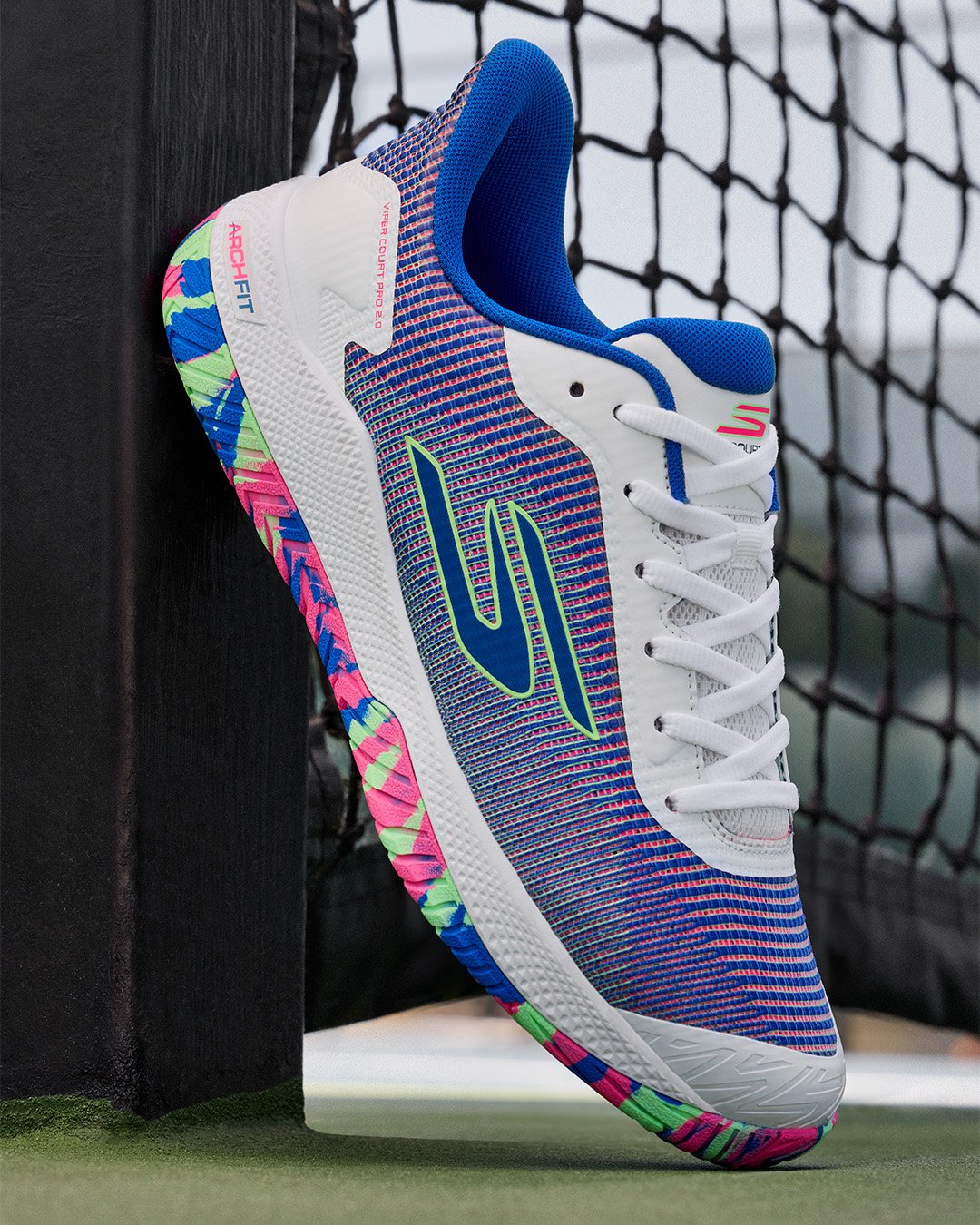
Skechers Pickleball Shoes to Get You Started
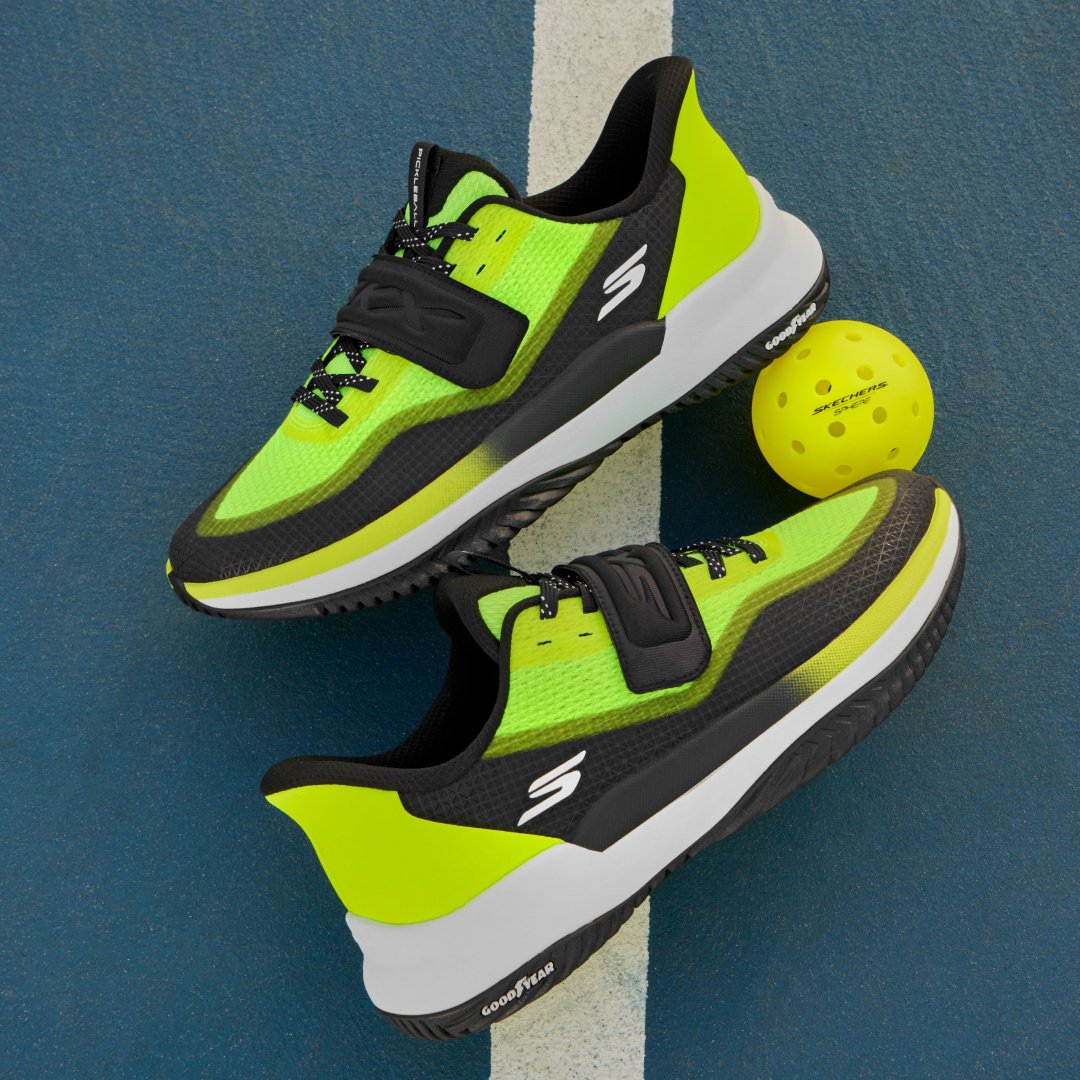
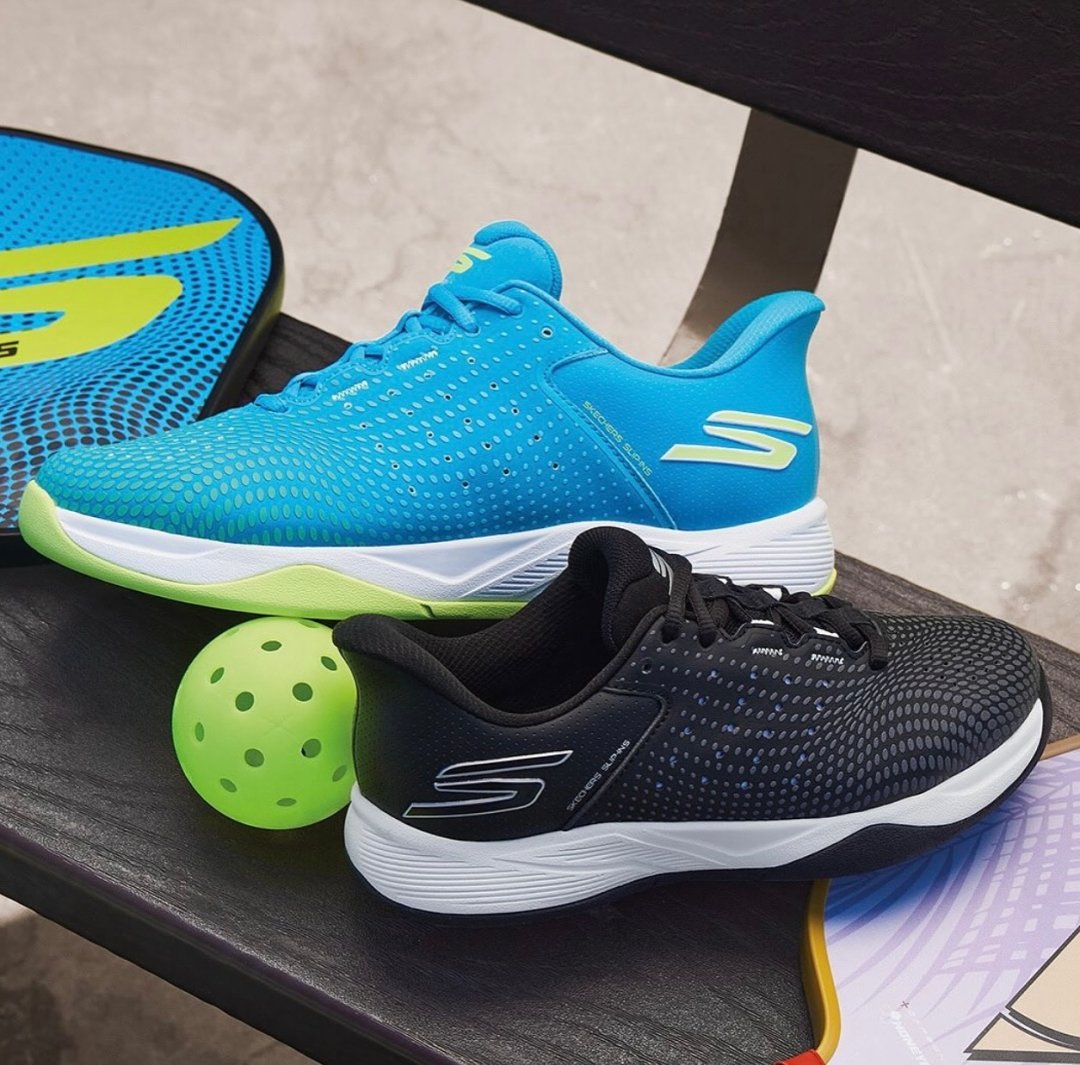
For pickleball’s side steps and quick stops, choose court shoes with a secure fit and traction suited to your playing surface. Both models below feature Relaxed Fit® for room at the toe and forefoot. Check indoor facilities’ non-marking outsole requirements.
For Hands-Free Entry: Viper Court Reload
Skechers Hands Free Slip-ins®: Viper Court Reload pairs hands-free entry with adjustable laces and a Heel Pillow® to hold your foot securely. Lightweight ULTRA FLIGHT® cushioning adds comfort, while the Goodyear® Performance outsole provides traction and durability. Choose it for easy entry, and adjust the laces before playing.
Shop Women's Viper Court REloadFor a Performance-Focused Court Shoe: Viper Court Pro 2.0
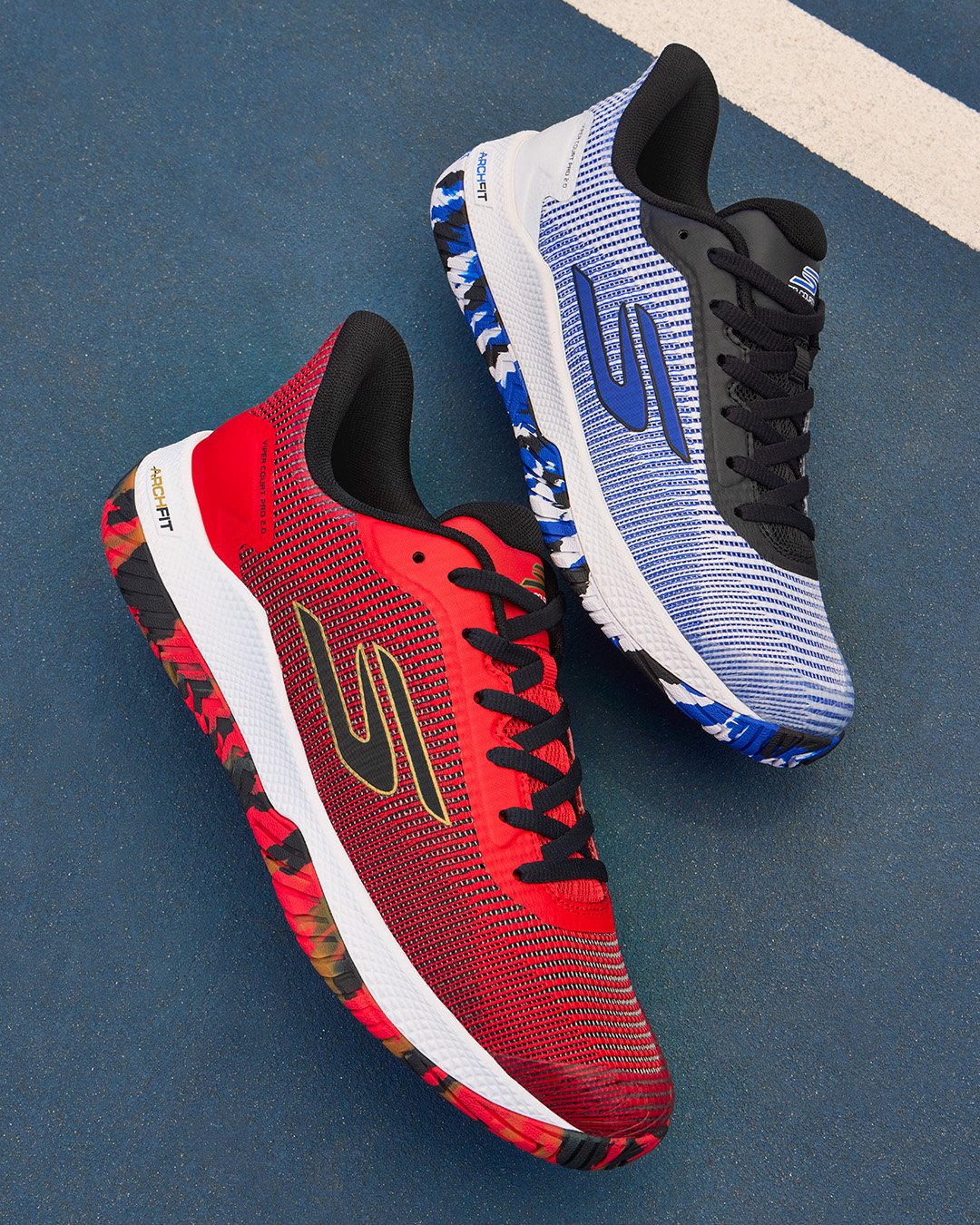
The Skechers Viper Court Pro™ 2.0 combines durable, breathable mesh, a rubber toe guard and a Goodyear Gold compound outsole. Choose it if upper and toe durability are priorities, with lightweight ULTRA GO® cushioning for comfort.
Shop Women's Viper Court Pro 2.0Try on both shoes in your chosen pair with your playing socks. Check for a secure heel, comfortable toe room and minimal sliding during gentle side steps.
For a deeper comparison, explore our guide to Skechers pickleball shoes.
For a deeper comparison, explore our guide to Skechers pickleball shoes.
Ready for Your First Rally?
Pick a court, find a partner and start with the basics: serve diagonally, respect the two bounces and call the score out loud. Give yourself permission to ask questions—and enjoy the moment your first good rally turns into your next game.


 You have successfully logged in.