










Firm Ground, Turf & Indoor Soccer Shoes: FG vs. TF vs. IC Guide
Shopping for soccer shoes? Learn the difference between firm ground vs. turf vs. indoor soccer shoes so you can match your outsole to natural grass, synthetic turf, or indoor court play.
Sep 1, 2026
Shopping for soccer cleats? Find the ideal Skechers cleat for the surface you play on most.
Whether you’re new to the pitch or simply due for a new pair, choosing the right cleat is more important than you might think. The outsole of your soccer cleat does more than touch the ground. It’s what connects every sprint, stop, cut, and change of direction to the surface beneath you. That is why soccer footwear comes in different outsole types, including Firm Ground (FG), Turf (TF), and Indoor Court (IC/IN).
Not sure which one is right for you? Here’s the quick breakdown: Choose FG for dry or slightly damp natural grass, TF for short synthetic turf or harder turf fields, and IC/IN for gyms, futsal courts, and flat indoor courts. Since no single pair ideal for every surface, the best place to start is where you play most often.
Whether you’re new to the pitch or simply due for a new pair, choosing the right cleat is more important than you might think. The outsole of your soccer cleat does more than touch the ground. It’s what connects every sprint, stop, cut, and change of direction to the surface beneath you. That is why soccer footwear comes in different outsole types, including Firm Ground (FG), Turf (TF), and Indoor Court (IC/IN).
Not sure which one is right for you? Here’s the quick breakdown: Choose FG for dry or slightly damp natural grass, TF for short synthetic turf or harder turf fields, and IC/IN for gyms, futsal courts, and flat indoor courts. Since no single pair ideal for every surface, the best place to start is where you play most often.
FG vs. TF vs. IC: Quick Comparison
| Surface Type | Best For | Avoid For | Outsole Design | What It Helps With | Skechers Example |
|---|---|---|---|---|---|
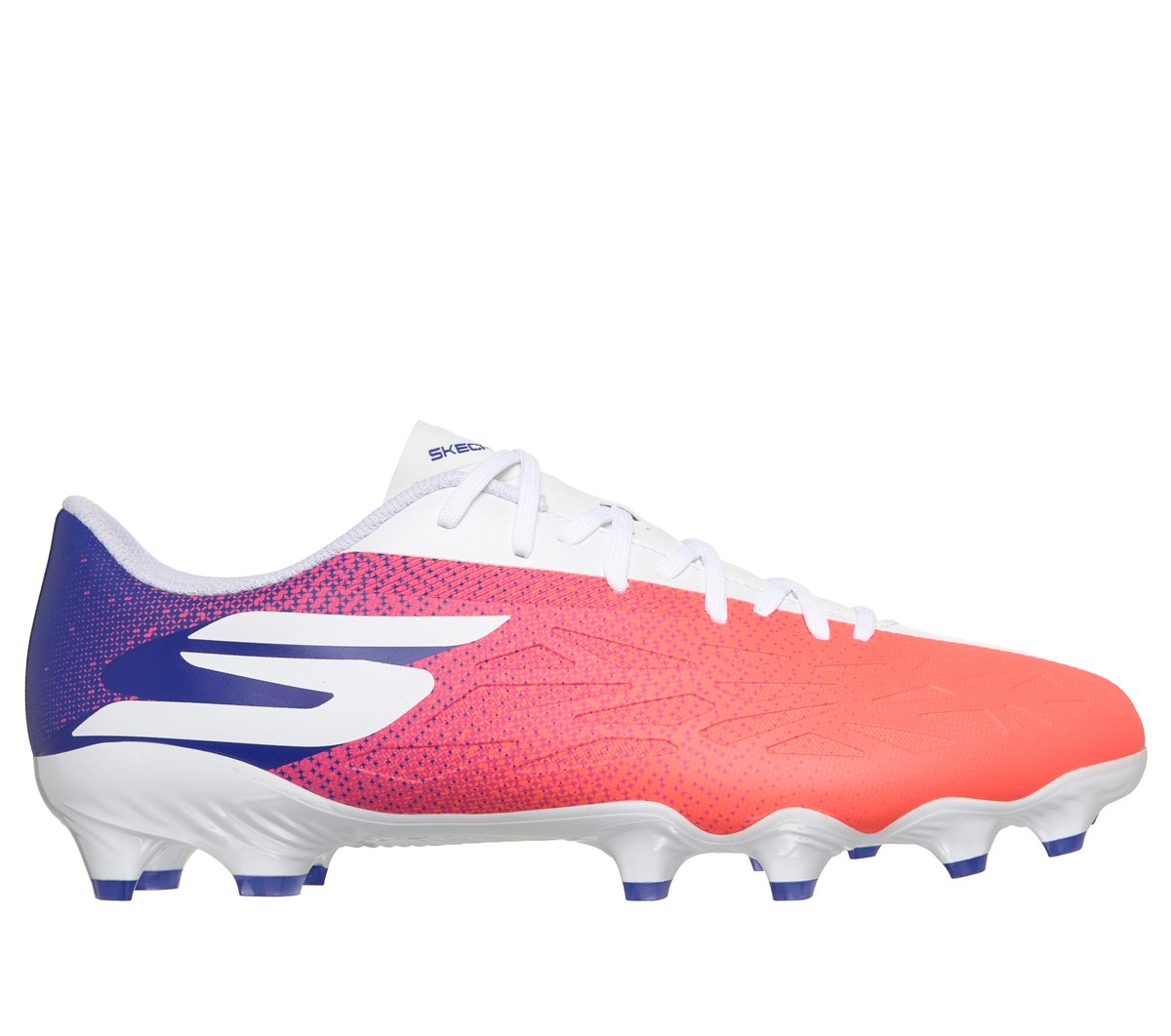
| FGFirm Ground | Dry or slightly damp natural grass | Indoor courts, short turf and very muddy grass | Molded cleats or a firm-ground traction plate | Grip, push-off, braking and stability on grass |
|
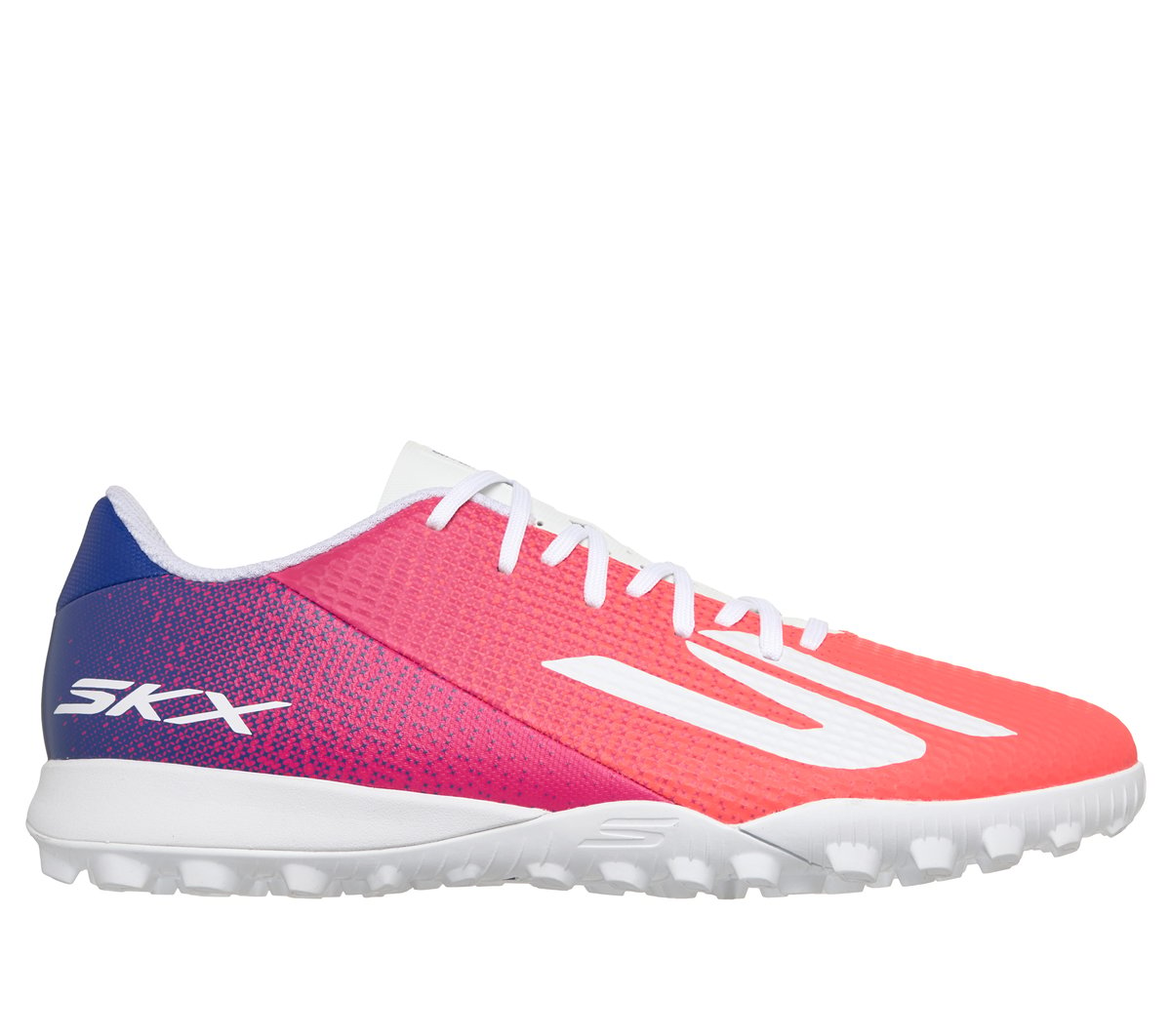
| TFTurf | Short synthetic turf and harder turf fields | Indoor gym floors and wet or muddy natural grass | Patterned rubber outsole with smaller grip points | Surface contact, turf grip and quick multidirectional movement |
|
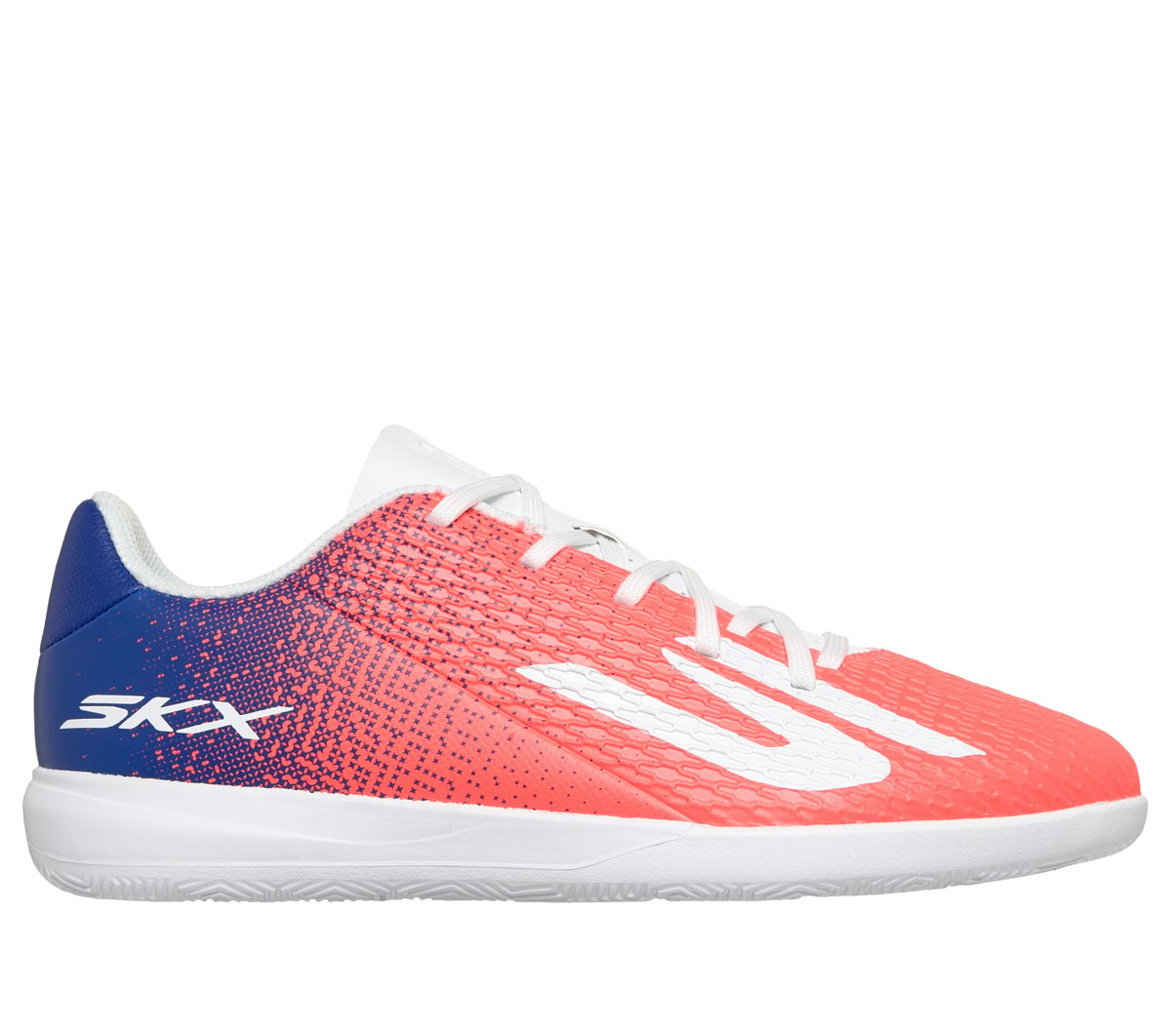
| IC/INIndoor Court | Gyms, futsal courts, indoor courts and flat court-style surfaces | Grass, turf and soft ground | Flat rubber outsole without exposed studs | Court grip, quick turns and control on hard, flat surfaces |
|
Product examples may vary by size, color, and availability. Check each product page for the latest options before you buy.
What Are Artificial Grass Soccer Cleats?
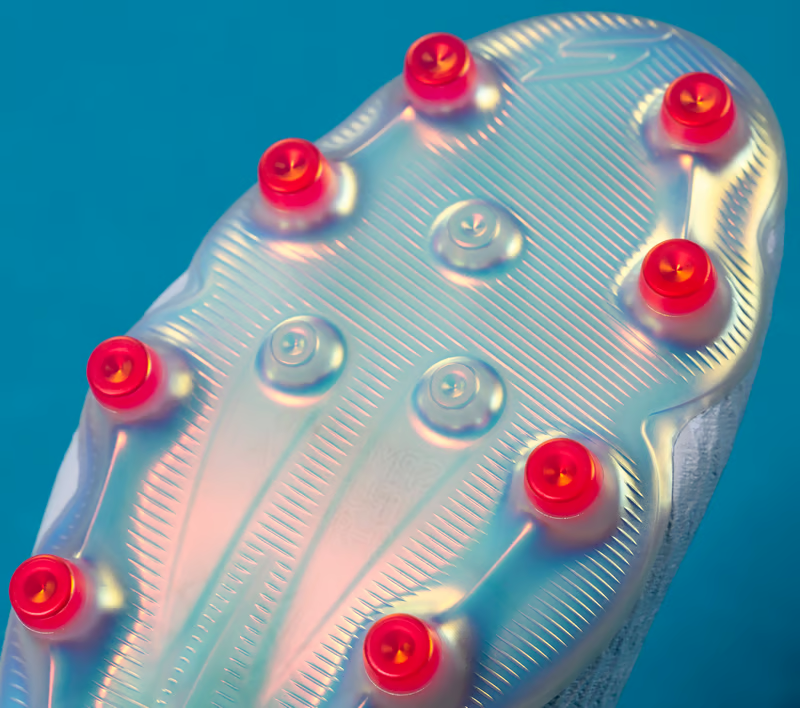
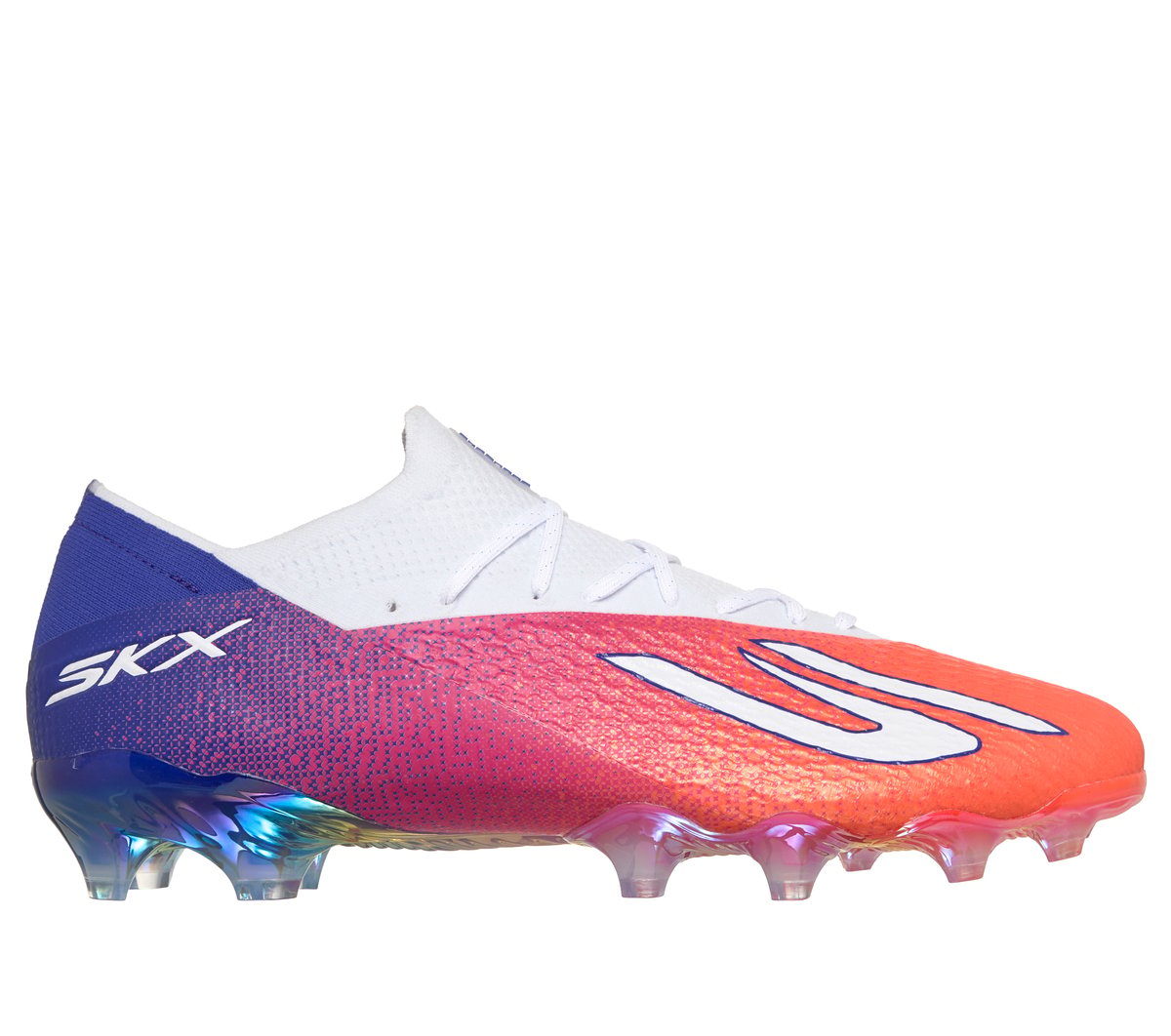
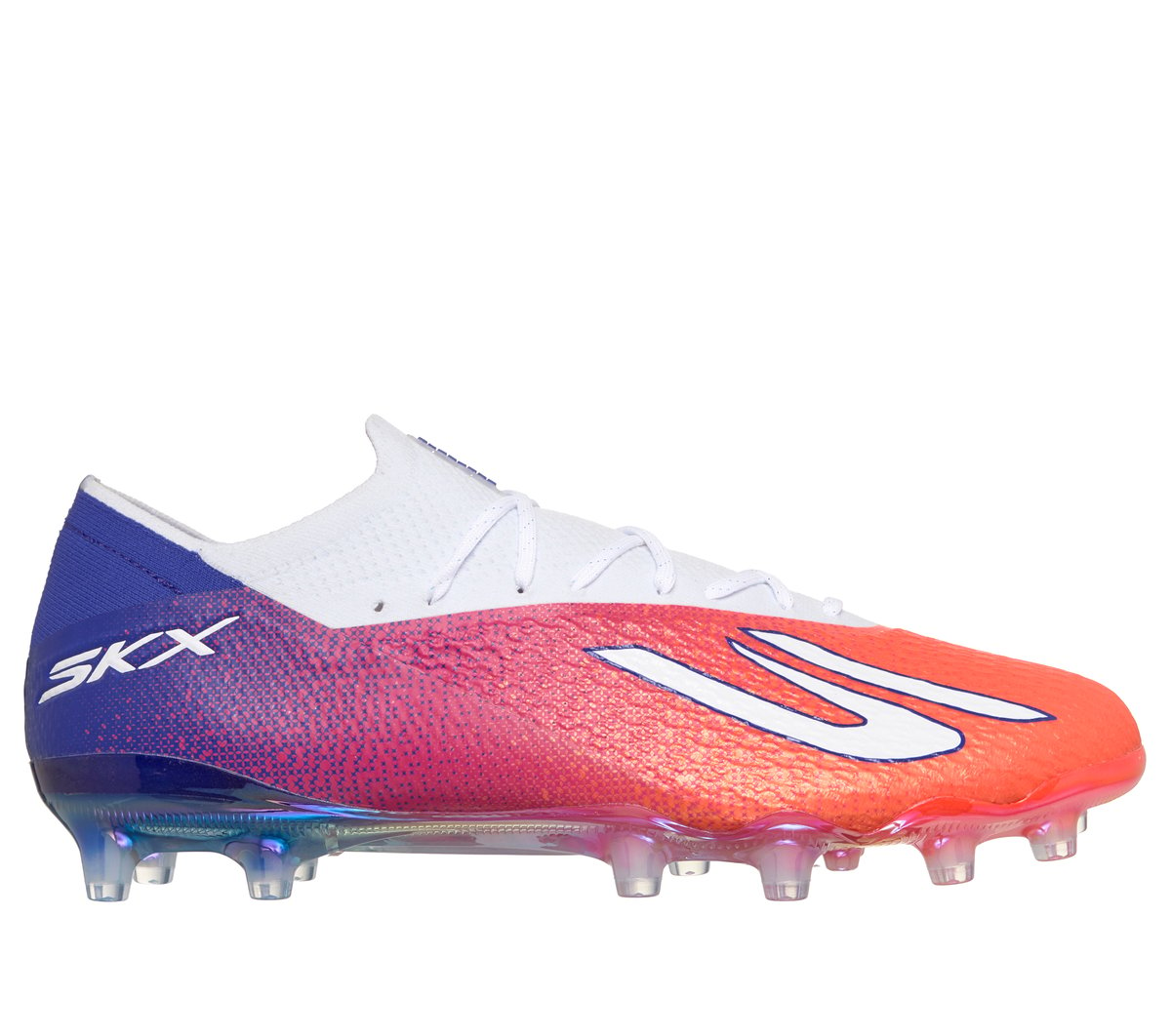
Playing on artificial grass? Look for AG in the product name or on the product page. AG is different from TF: AG outsoles are specifically engineered for artificial-grass surfaces, designed to distribute weight evenly and prevent slipping. TF outsoles, on the other hand, are usually better suited for shorter, harder turf-style surfaces. For example, the Skechers SKX_2 Elite AG features an engineered-studs traction-patterned outsole specifically designed for artificial grass surfaces. Insert your text here
Shop Skechers SoccerWhat Are Firm Ground Soccer Cleats?
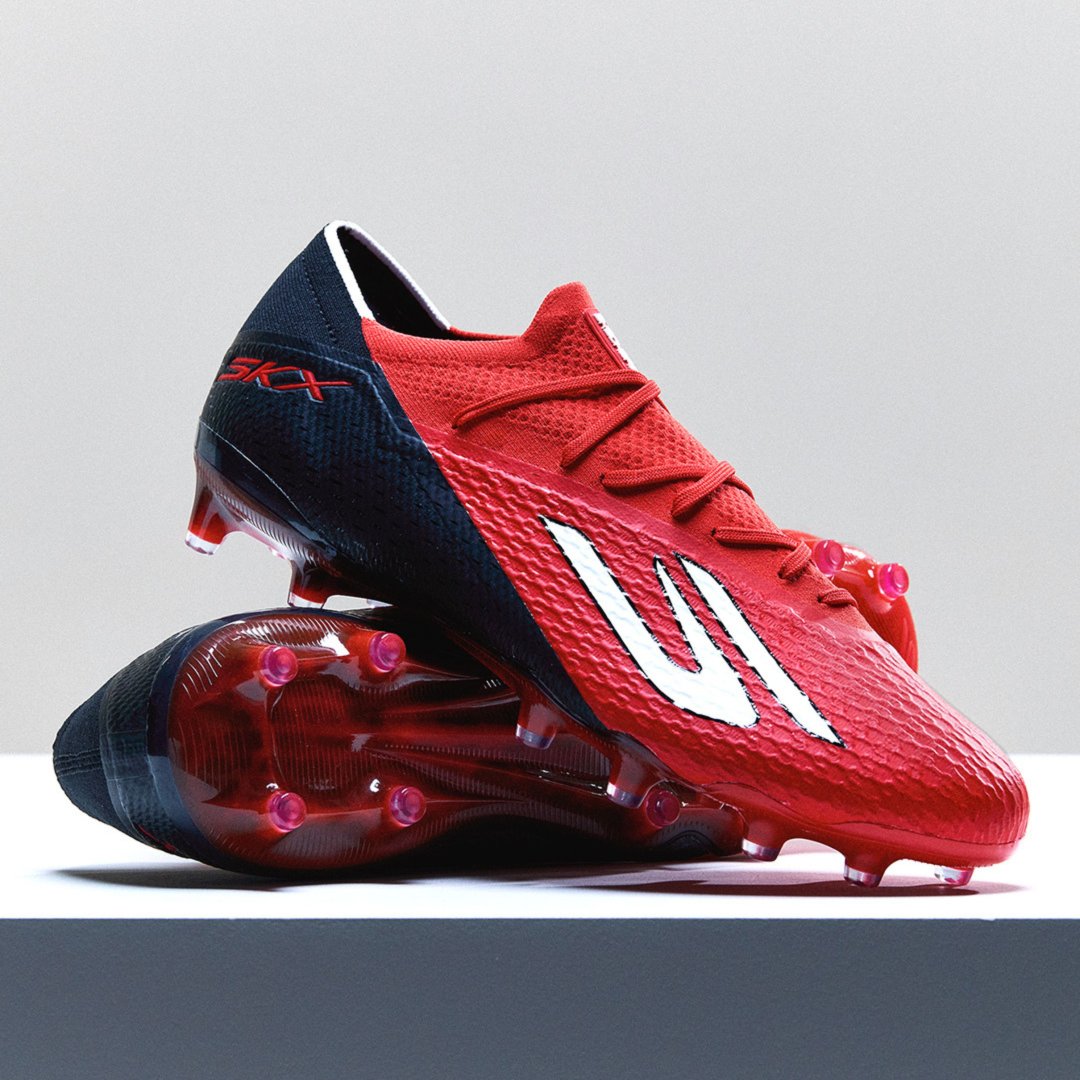
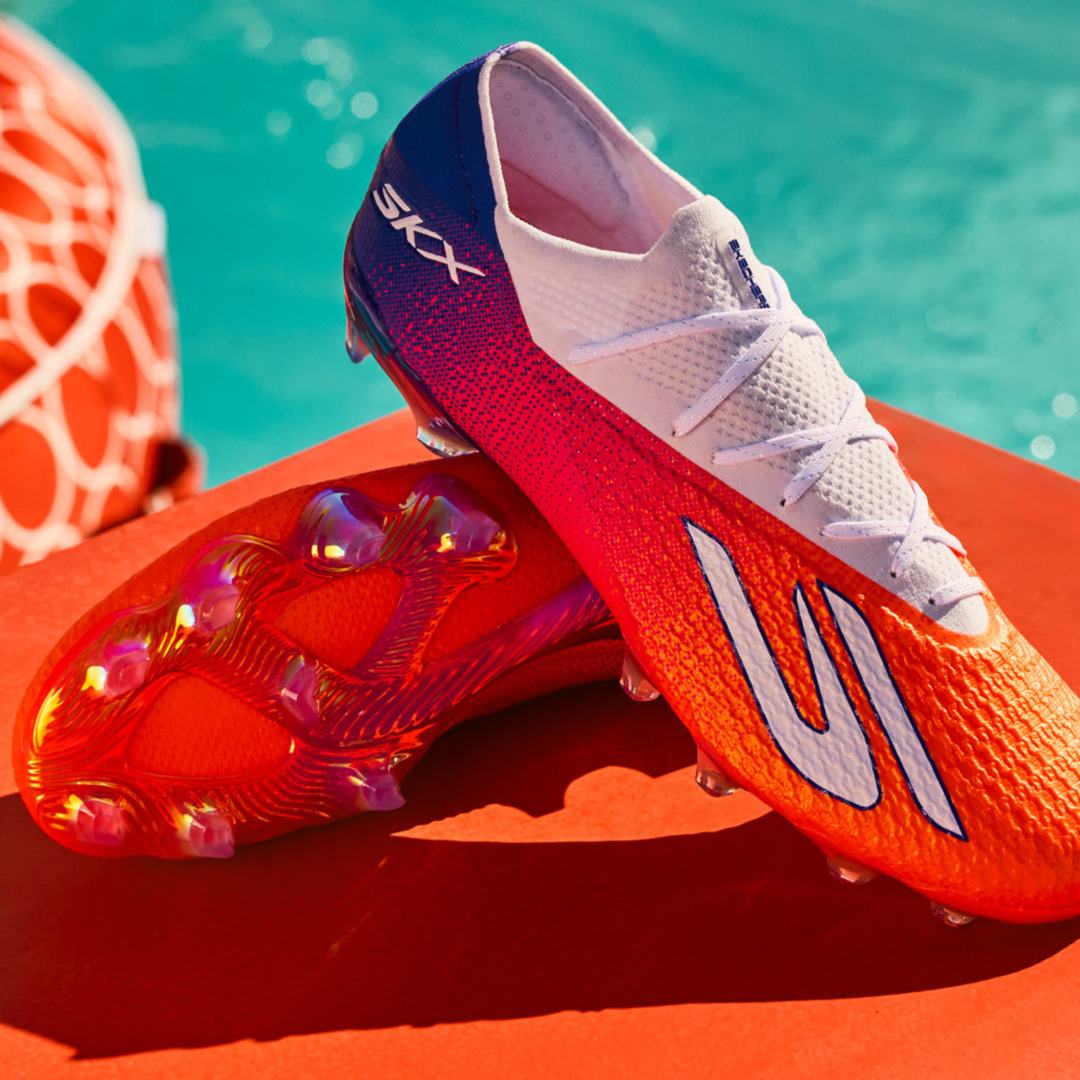
Firm Ground, often shortened to FG, is made for natural grass fields that are dry or slightly damp. FG outsoles use molded cleats, studs, blades, or traction plates that help the shoe bite into grass.
That matters because natural grass is softer than a court but not as flat or compact as indoor flooring. FG traction helps with the push-off, stop, and change-of-direction movements that happen throughout a match.
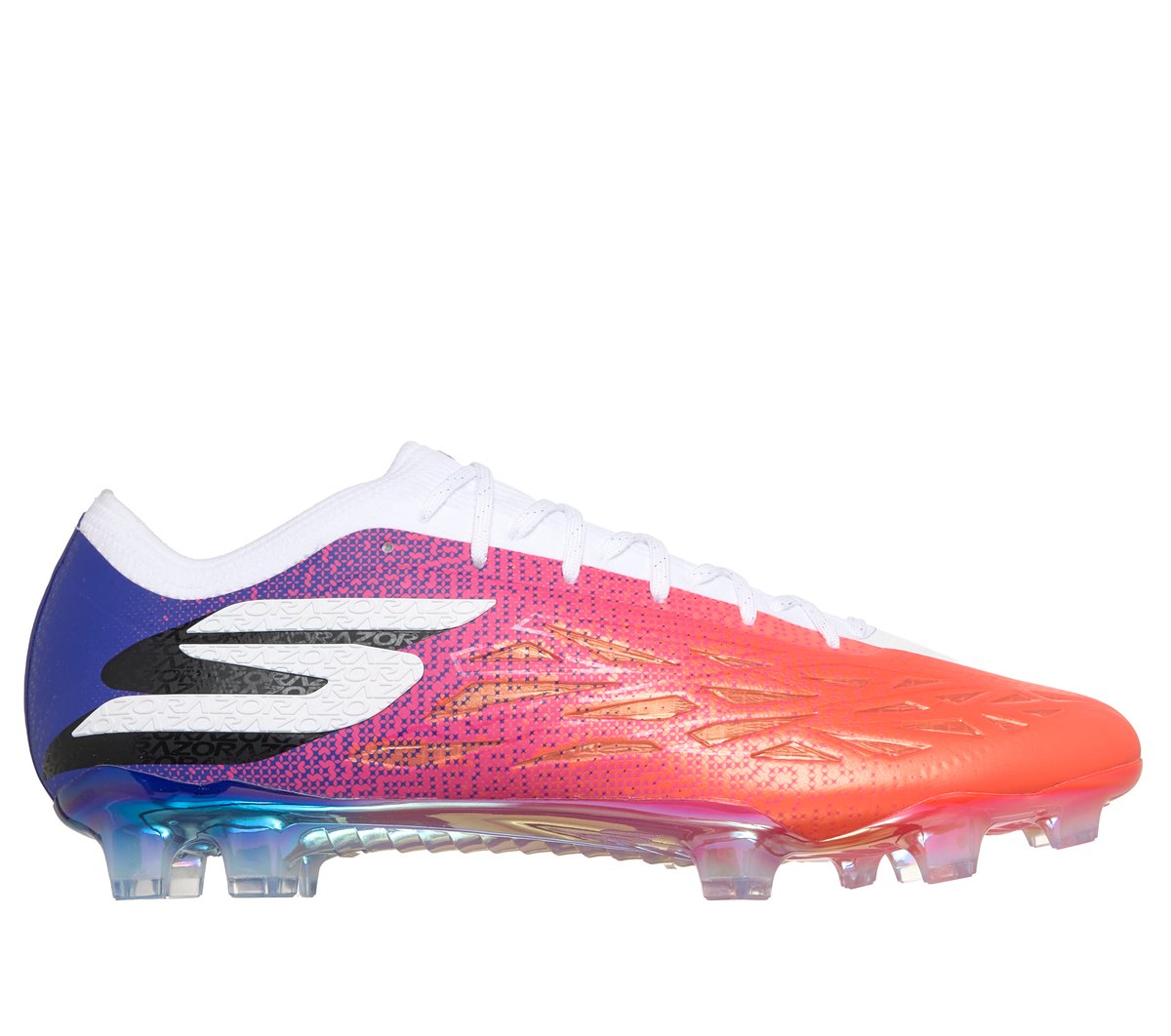
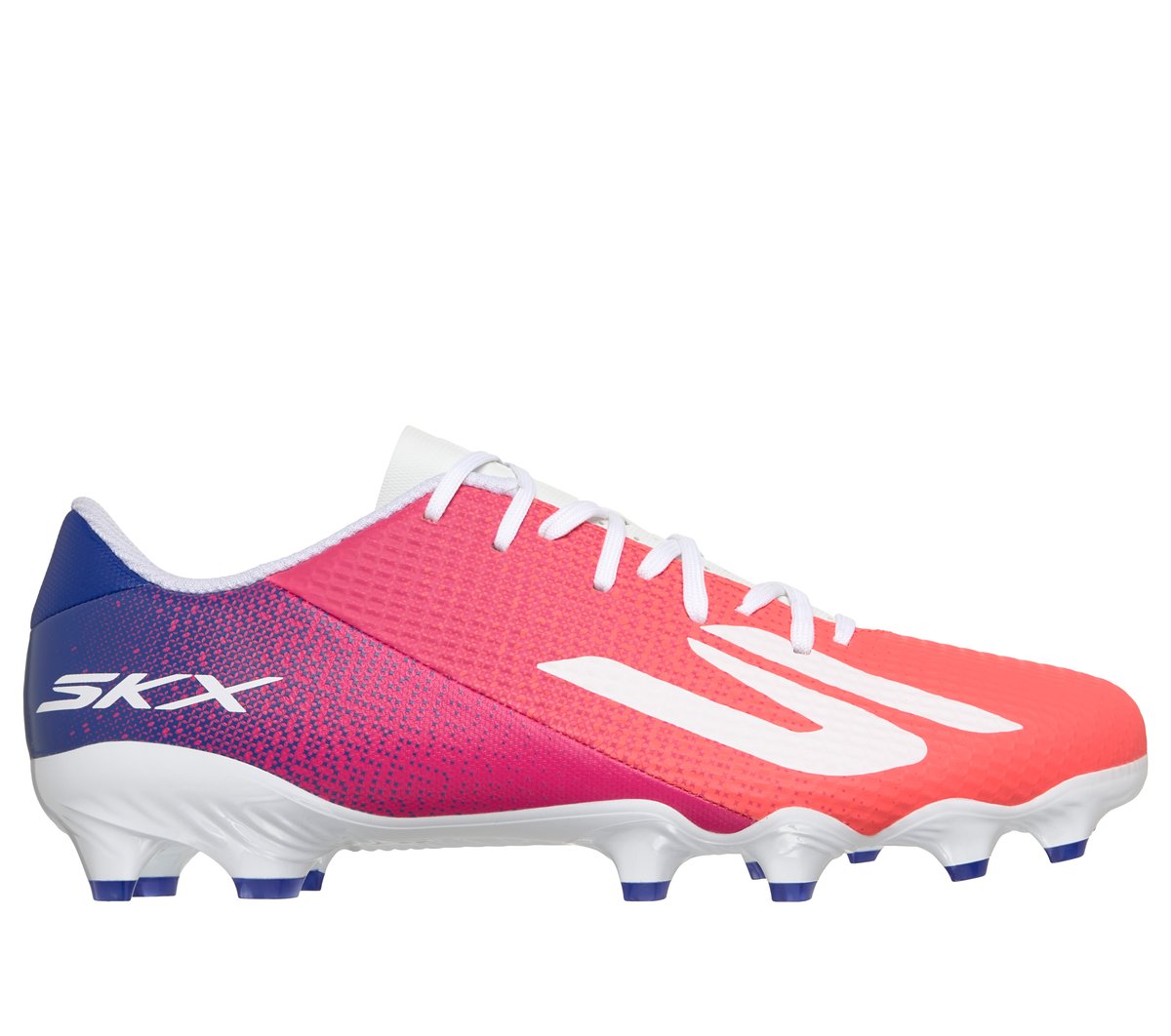
For example, the Skechers SKX_2 Academy FG product page describes a responsive firm-ground TPU plate with cleats for natural grass surfaces, plus Skechers Move Foam™ cushioning and P.S.C. upper molding for control details.
That matters because natural grass is softer than a court but not as flat or compact as indoor flooring. FG traction helps with the push-off, stop, and change-of-direction movements that happen throughout a match.
For example, the Skechers SKX_2 Academy FG product page describes a responsive firm-ground TPU plate with cleats for natural grass surfaces, plus Skechers Move Foam™ cushioning and P.S.C. upper molding for control details.
FG benefits, in plain language
Grip: Molded cleats help bite into natural grass.
Stability: A firm-ground plate helps support push-off and stopping movements.
Comfort: Cushioning varies by style, with Skechers Move Foam™ and HYPER BURST PRO™ appearing across select Skechers Soccer™ examples.
Touch: Select styles include upper molding or boot-to-ball grip details designed around control.
Select elite FG styles may add performance details such as lightweight cushioning, secure upper construction, internal grip elements, boot-to-ball grip details, and traction patterns designed for firm-ground play. Deeper product specs should live in product cards or linked product pages so this guide stays focused on surface choice.
Stability: A firm-ground plate helps support push-off and stopping movements.
Comfort: Cushioning varies by style, with Skechers Move Foam™ and HYPER BURST PRO™ appearing across select Skechers Soccer™ examples.
Touch: Select styles include upper molding or boot-to-ball grip details designed around control.
Select elite FG styles may add performance details such as lightweight cushioning, secure upper construction, internal grip elements, boot-to-ball grip details, and traction patterns designed for firm-ground play. Deeper product specs should live in product cards or linked product pages so this guide stays focused on surface choice.
Choose FG if:
You mainly play on natural grass fields that are dry, firm, or slightly damp.
Skip FG if:
You usually play indoors, on short turf, or on very wet and muddy natural grass. Those surfaces call for different outsole designs.
What Are Turf Soccer Shoes?
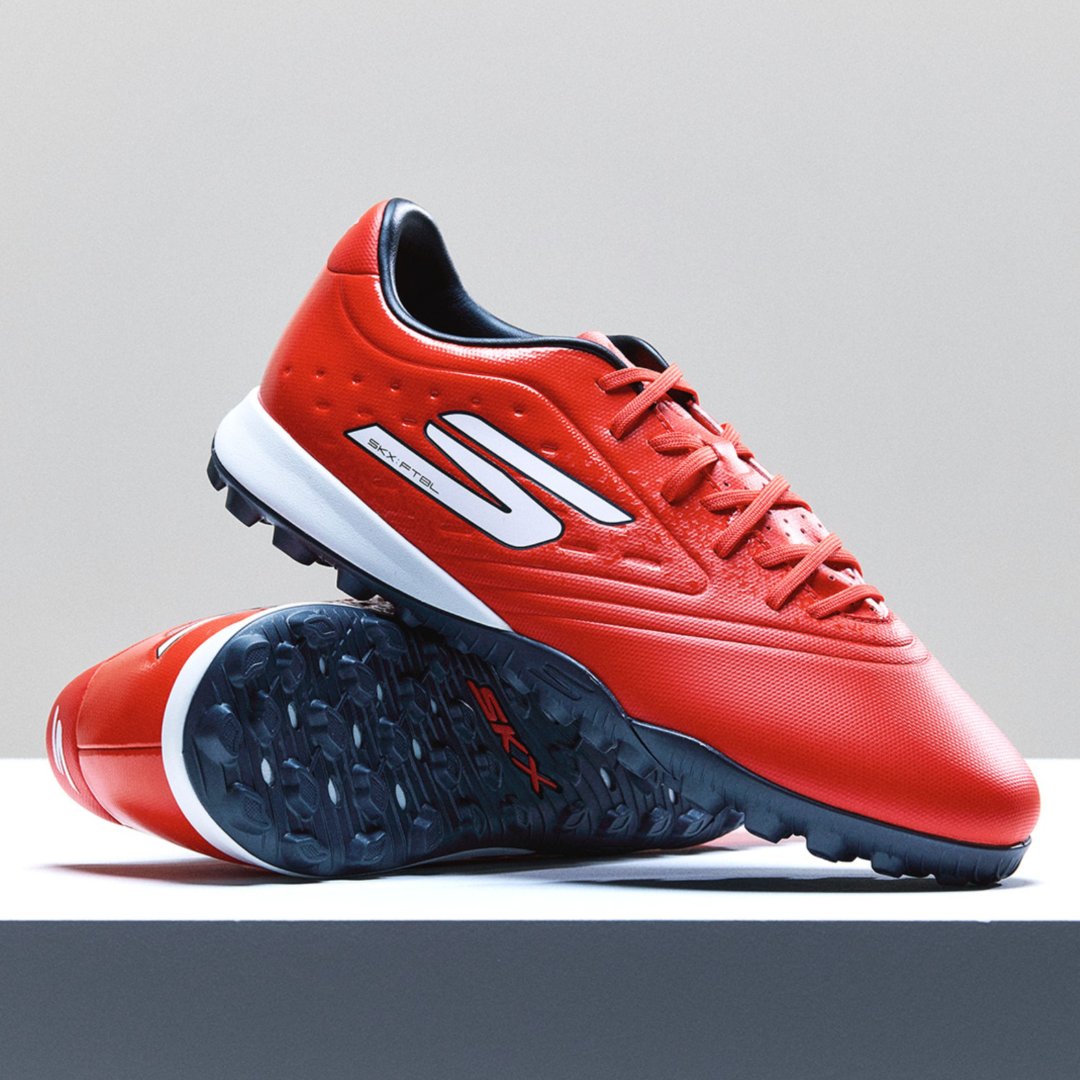
Turf, often labeled TF, are designed for short synthetic turf and harder turf-style fields. Rather than longer molded cleats, turf outsoles feature a patterned rubber sole with multiple smaller grip points spread across the base of the cleat.
That design maximizes the amount of rubber in contact with the surface at any given time. On short, hard turf, the goal is reliable grip and traction without the deeper bite of a firm-ground cleat, which can catch and cause unnecessary stress on your joints.
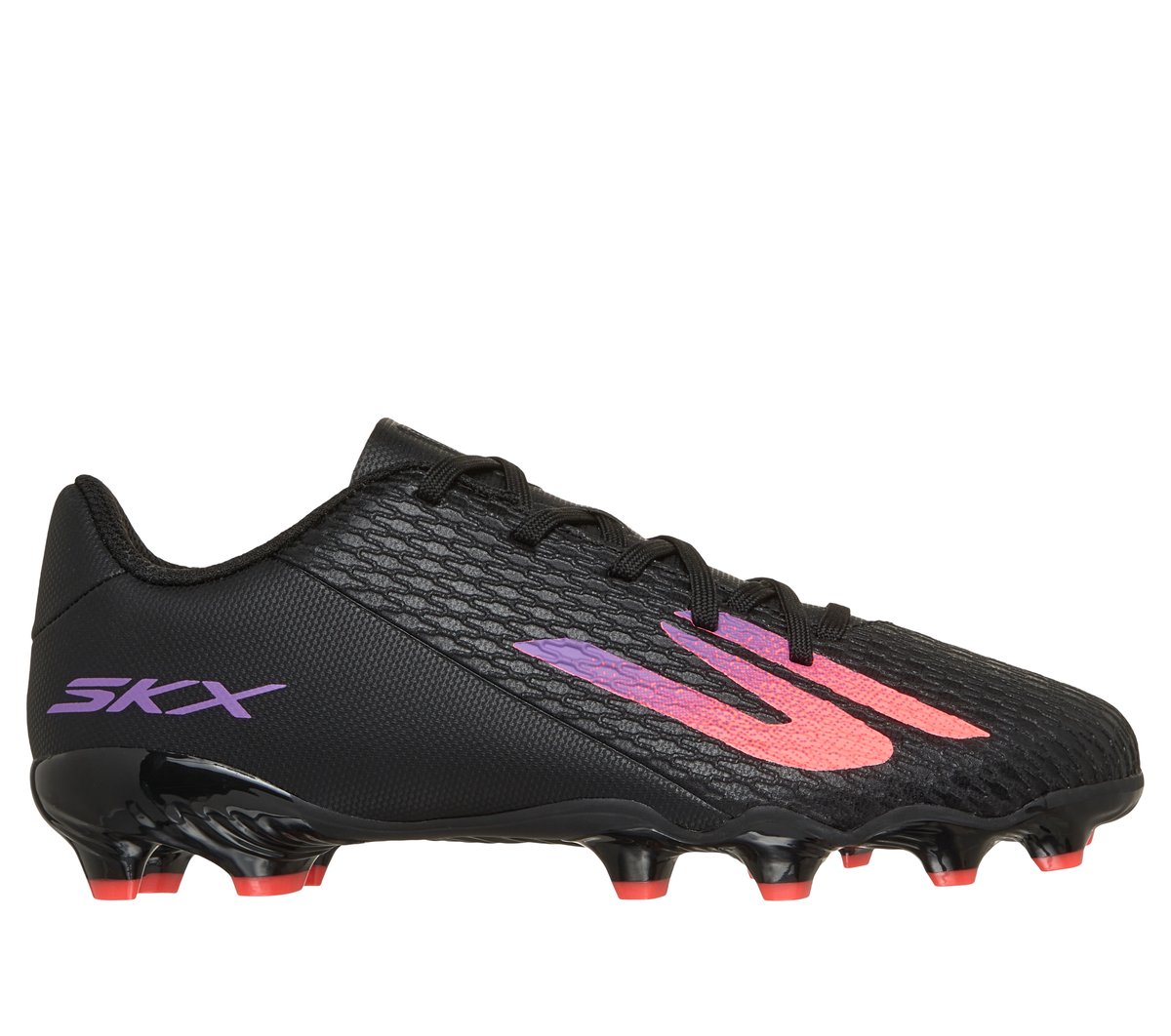
The Skechers SKX_2 Academy TF product page describes a rubber outsole designed to start, stop, and accelerate in all directions for turf surfaces. The Skechers SKX_2 Jr Youth TF product page also describes a youth turf style with a patterned rubber outsole supporting multi-directional grip and movement.
That design maximizes the amount of rubber in contact with the surface at any given time. On short, hard turf, the goal is reliable grip and traction without the deeper bite of a firm-ground cleat, which can catch and cause unnecessary stress on your joints.
The Skechers SKX_2 Academy TF product page describes a rubber outsole designed to start, stop, and accelerate in all directions for turf surfaces. The Skechers SKX_2 Jr Youth TF product page also describes a youth turf style with a patterned rubber outsole supporting multi-directional grip and movement.
TF benefits, in plain language
Surface contact: Smaller rubber grip points help spread contact across turf.
Quick movement: Turf patterns are built for short-area stops, starts, and cuts.
Comfort: Select Skechers TF styles include cushioning details for underfoot comfort.
Control: Select TF styles include upper molding details designed around ball control.
Quick movement: Turf patterns are built for short-area stops, starts, and cuts.
Comfort: Select Skechers TF styles include cushioning details for underfoot comfort.
Control: Select TF styles include upper molding details designed around ball control.
Choose TF if:
You play most often on short synthetic turf or harder turf fields.
Skip TF if:
You play on indoor gym floors or wet natural grass. Turf outsoles are not as flat as indoor court shoes and are not designed to dig into muddy grass.
Artificial Turf Generations: 1G to 5G
Not all synthetic fields play the same.Older turf can feel short, hard, and fast, while newer artificial turf systems feel closer to natural grass. If you know the type of turf you play on, use this quick guide to help match the surface to the right soccer cleat for you.
| Turf Generation | What It Means | Surface Feel | Best Footwear | Shopper Takeaway |
|---|---|---|---|---|
| 1G | Short carpet-style turf with no infill | Hard, fast and abrasive | TF | Choose Turf shoes for short, hard synthetic surfaces where smaller rubber grip points help with surface contact. |
| 2G | Synthetic turf with sand infill | Softer than 1G but still firm | TF | Turf shoes are still the best match because the surface is firm and does not need a deeper artificial-grass stud pattern. |
| 3G | Longer turf with sand and rubber infill | More like natural grass, with better grip and cushioning | AG / TF acceptable | Look for AG when the field feels closer to artificial grass; TF can be acceptable on some 3G fields depending on the surface and product guidance. |
| 4G | Improved 3G-style surface with better fibers and cushioning | More natural underfoot feel | AG | Choose AG footwear when the surface is closer to artificial grass than short, hard turf. |
| 5G | Advanced artificial turf using premium materials and eco-friendly infills | Closest synthetic feel to natural grass | AG | Look for AG footwear designed for artificial-grass traction and a more grass-like synthetic playing surface. |
Is TF the Same as AG?
No. TF and AG are both synthetic-surface terms, but they are not the same.
AG usually means Artificial Grass, while TF usually means Turf. In shopper terms, AG is the label to look for when a product is built specifically around artificial-grass traction, while TF is the label to look for when you play on short, harder turf-style surfaces.
The key is to check the product name and product page. Skechers SKX_2 Elite AG, for example, is named as an AG style and is described with outsole details for artificial grass surfaces.
AG usually means Artificial Grass, while TF usually means Turf. In shopper terms, AG is the label to look for when a product is built specifically around artificial-grass traction, while TF is the label to look for when you play on short, harder turf-style surfaces.
The key is to check the product name and product page. Skechers SKX_2 Elite AG, for example, is named as an AG style and is described with outsole details for artificial grass surfaces.
What Are Indoor Court Soccer Shoes?
Indoor Court soccer shoes, often marked IC or IN, are made for hard, flat surfaces like gyms, futsal courts, indoor courts, and court-style play.
The outsole difference is easy to spot: indoor shoes do not use exposed cleats or turf lugs. They use a flatter rubber outsole that is meant to grip smooth, hard surfaces.
Youth examples include Skechers SKX_2 Jr Youth IC and Skechers Razor 2 Jr Youth IC. These youth IC styles feature rubber outsoles designed for multi-directional traction on indoor and court surfaces.
The outsole difference is easy to spot: indoor shoes do not use exposed cleats or turf lugs. They use a flatter rubber outsole that is meant to grip smooth, hard surfaces.
Youth examples include Skechers SKX_2 Jr Youth IC and Skechers Razor 2 Jr Youth IC. These youth IC styles feature rubber outsoles designed for multi-directional traction on indoor and court surfaces.
IC/IN benefits, in plain language
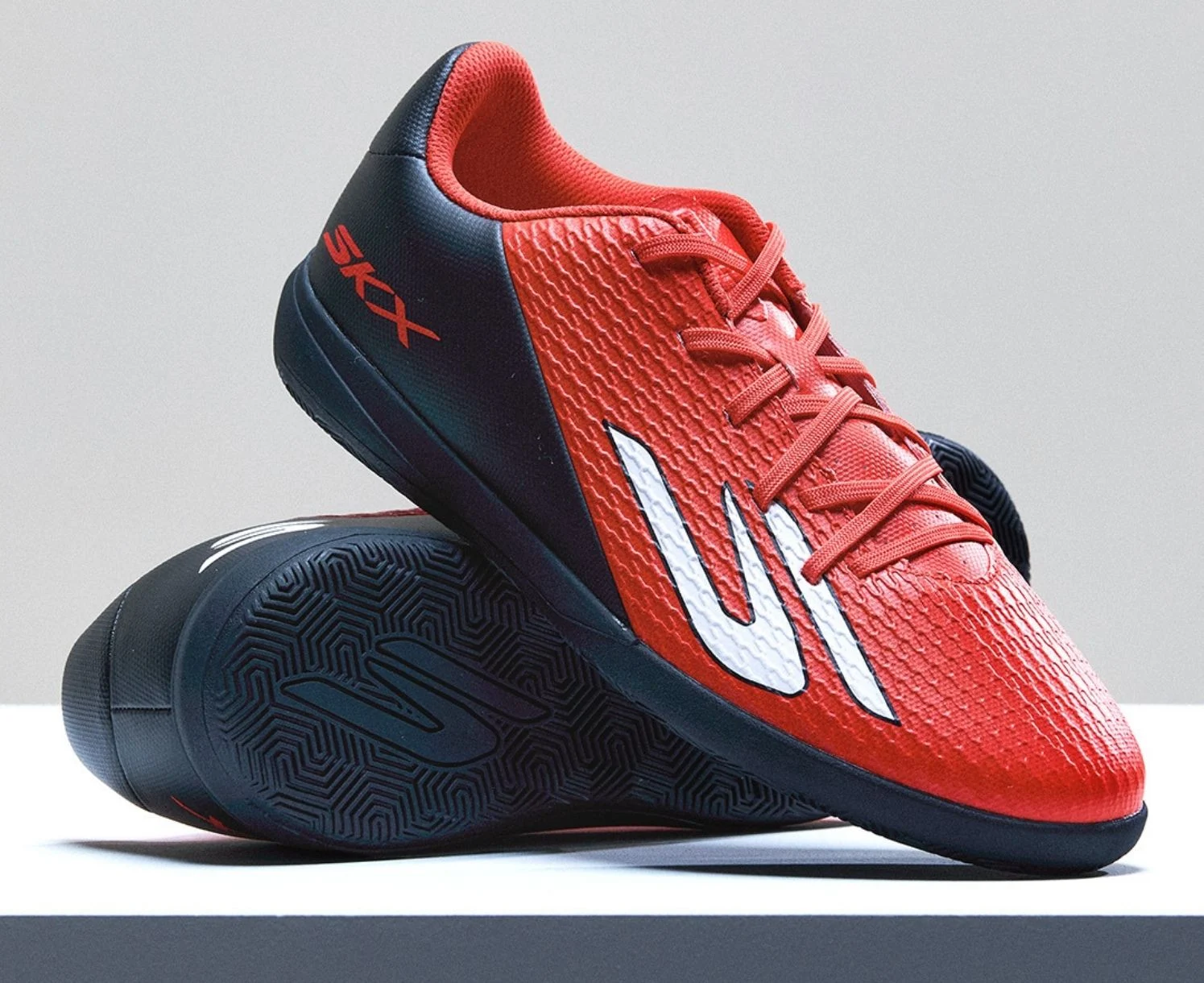
Flat-surface grip: Rubber outsoles are designed for court-style surfaces.
No exposed studs: A flat outsole keeps the shoe appropriate for hard, smooth floors.
Quick turns: Indoor court shoes are built for multi-directional movement on flat surfaces.
No exposed studs: A flat outsole keeps the shoe appropriate for hard, smooth floors.
Quick turns: Indoor court shoes are built for multi-directional movement on flat surfaces.
Choose IC/IN if:
You play futsal, gym soccer, or on flat indoor court-style surfaces.
Skip IC/IN if:
You play on grass or turf. A flat indoor outsole does not provide the cleat bite or turf grip pattern needed for those surfaces.
What About AG and SG Soccer Cleats?
You may also see AG for Artificial Grass and SG for Soft Ground when researching soccer footwear. AG is a separate artificial-grass surface label, while SG is generally associated with softer, wetter natural-grass conditions.
How to Choose the Right Soccer Shoe in 10 Seconds
Ask one question first: Where do I play most often?
- If the answer is natural grass, start with FG.
- If the answer is short synthetic turf, start with TF.
- If the answer is a gym, futsal court, or indoor court, start with IC/IN.
- If the answer is artificial grass, look for a product page that specifically says AG or artificial grass.
A single pair can be a compromise across surfaces. The best match is the outsole built for the surface where you actually play.
If you know the turf generation, use TF for older short or firm turf like 1G and 2G, and look for AG on more grass-like artificial turf systems such as 4G and 5G. On 3G, AG is often a strong match, while TF may also be acceptable depending on the field.
If you know the turf generation, use TF for older short or firm turf like 1G and 2G, and look for AG on more grass-like artificial turf systems such as 4G and 5G. On 3G, AG is often a strong match, while TF may also be acceptable depending on the field.
Frequently Asked Questions
FG means Firm Ground. FG soccer shoes are built for natural grass fields that are dry or slightly damp.
TF means Turf. Turf soccer shoes are designed for short synthetic turf and harder turf-style fields.
For regular turf play, choose a turf-specific TF shoe. FG outsoles are built to bite into natural grass, while TF outsoles use smaller rubber grip points designed for short synthetic turf and harder turf-style fields.
IC or IN means Indoor Court or Indoor. These shoes are designed for hard, flat court-style surfaces such as gyms, futsal courts, and indoor courts.
No. TF usually means Turf and is best for short, harder synthetic turf. AG usually means Artificial Grass and is generally designed for artificial-grass fields with a different traction setup.
AG means Artificial Grass. AG soccer shoes are designed for artificial-grass surfaces, so check the product name and product page when choosing between AG and TF styles.
Turf shoes are not the best choice for indoor courts. Indoor Court shoes use a flatter rubber outsole designed for hard, flat surfaces.
Start with the surface you play on most often. If you split time evenly between natural grass and turf, consider separate FG and TF pairs for more surface-specific traction.
They are often similar in purpose. Both are designed for hard, flat court-style surfaces and typically use a flat rubber outsole without exposed studs.
Yes. Kids should still match their shoes to the surface they play on most. A youth player on turf should look for turf-appropriate traction, while a youth player on indoor courts should use an indoor court outsole.

 You have successfully logged in.